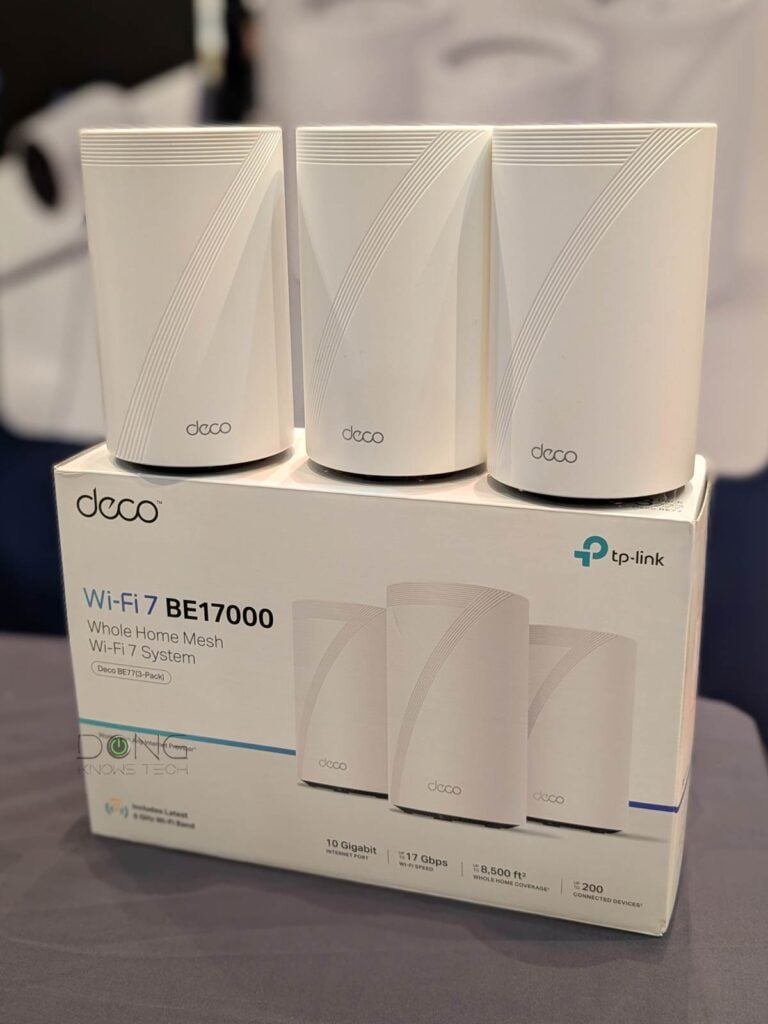
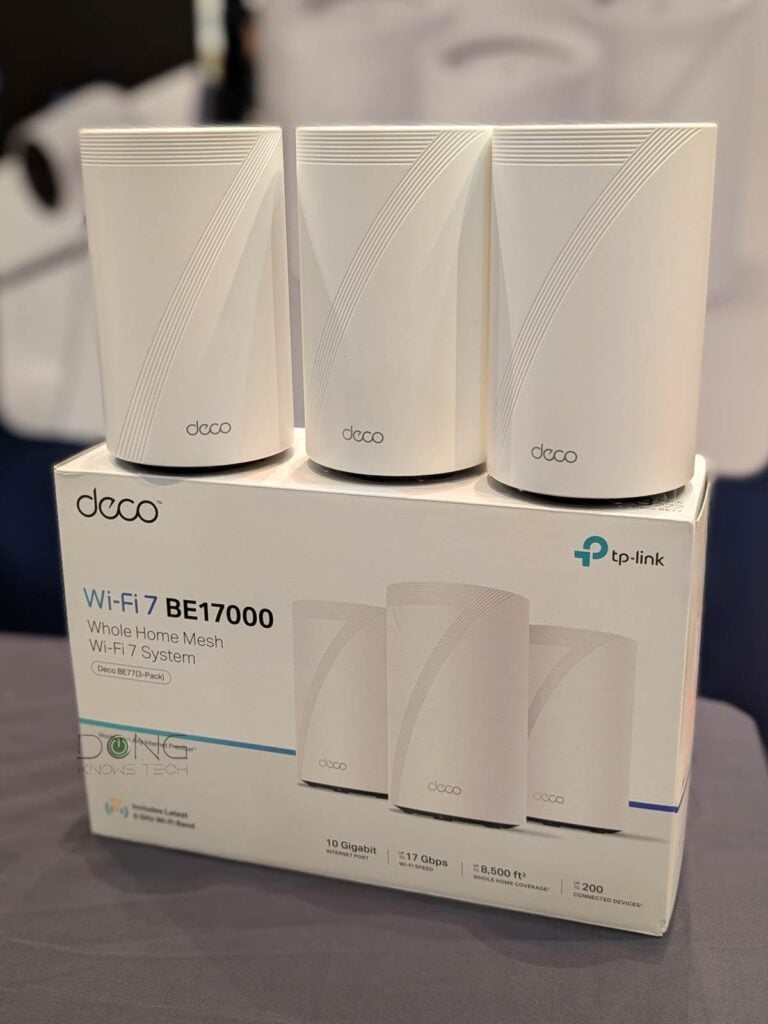
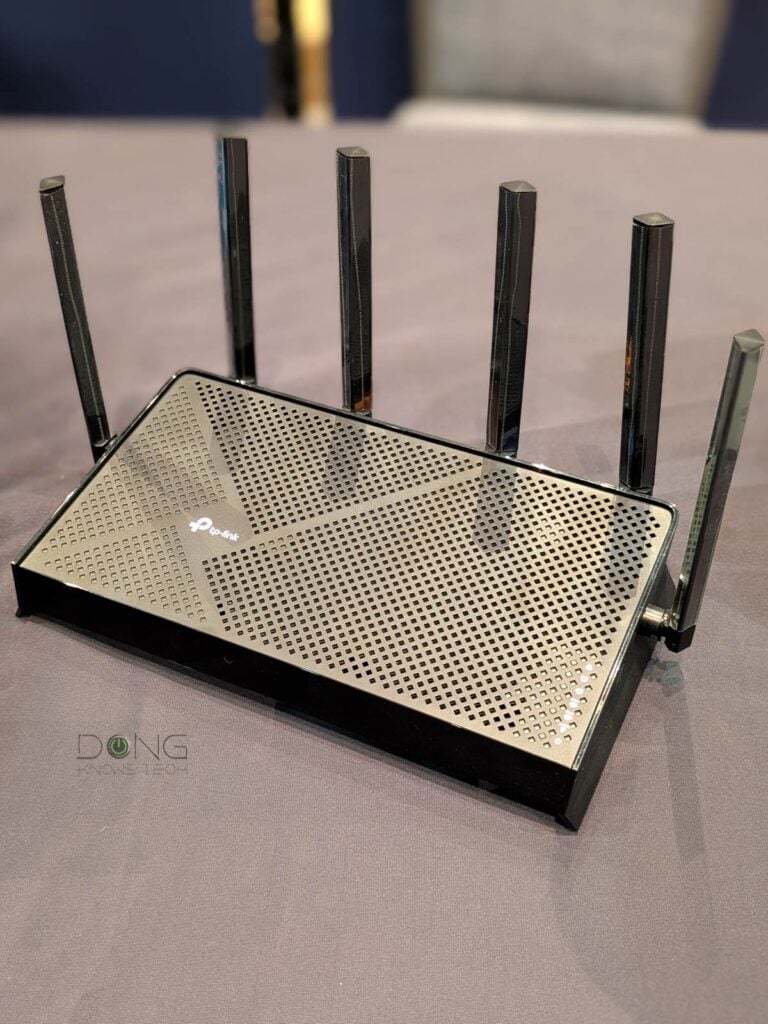
TP-Link today showcased its two new Wi-Fi 7 devices at CES 2026: the Archer BE670 and the Deco BE77. As you might guess from the name, the former is meant to be a standalone router (though you can get multiple units to form an EasyMesh system) and the latter is a purpose-built mesh solution.
Compared to this time last year, the number of new devices TP-Link announced this year is modest, likely because the company already has arguably the most extensive portfolio of Wi-Fi 7 solutions. In fact, these two new members barely squeeze into a tight spot in the Wi-Fi 7 specification landscape, mainly to help TP-Link stay on the competitive edge.
TP-Link at CES 2026: That single-10Gbps-port pain
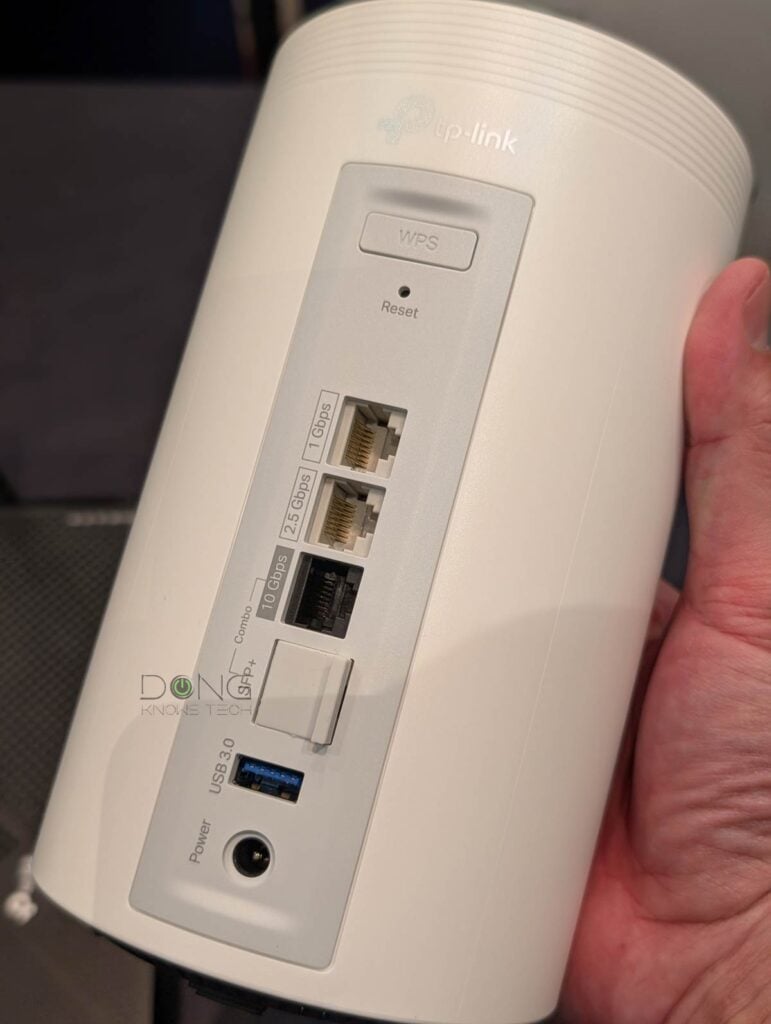
While the two new pieces of hardware are totally different from each other in design and target audience, they share one thing in common: each has only one 10Gbps port.
The Archer BE670 comes with a 10Gbps WAN port, one 2.5Gbps LAN port, and two Gigabit LAN ports. While the ports of the Deco BE77 are auto-sensing, there’s one 10Gbps port (which is an RJ45/SFP+ combo port), a 2.5Gbps port, and one Gigabit port–you connect one of them to an Internet source, and it’ll work as the WAN, and the rest will function as LAN.
The lack of a second 10Gbps port means that the fastest wired connection you can get from the hardware is limited by its 2.5Gbps port. As a result, if you have a faster-than-2.5Gbps broadband, there’s generally no way to experience that meaningfully with either of the new devices.
However, for users with sub-2Gbps bandwidth needs, which is the majority of users, the pain from the lack of a second 10Gbps link doesn’t apply.
Familiar variants
Other than that, the new router and mesh system are not new; they are simply slight variants of previously released hardware.
The Archer BE670 shares the same design as the dual-band Archer BE400, but is now a tri-band and has a 10Gbps port.
The Deco BE77 looks the same as the Deco BE63 (which is known as the Deco BE65 in certain retailers) but with higher hardware specs, though not as high as the top-tier Deco BE85, which has two 10Gbps ports and higher 5GHz specs.
Made to compete
So what’s the point of releasing these two, considering TP-Link’s vast other similar options? The answer is to compete.
Specifically, TP-Link seems to pitch the Archer BE670 against the NETGEAR RS300, which costs more but offers slightly lower hardware specs, as shown in the table below.
| Archer BE670 | NETGEAR RS300 | |
| Price | $299.99 | $399.99 |
| Bands & Throughput | Tri-Band 12 Gbps | Tri-Band 12 Gbps |
| Wall-Mountable Design | Yes | No |
| Coverage | Up to 3,000 sq. ft. | Up to 3,000 sq. ft. |
| Device Capacity | 128 | 120 |
| WAN & LAN Ports | 1x 10 Gbps WAN 1x 2.5 Gbps LAN 3x 1 Gbps LAN |
1x 2.5 Gbps LAN 3x 1 Gbps LAN |
Similarly, the Deco BE77 seems designed to edge out the ASUS in terms of hardware specs and pricing, as shown in the table below, which shows the information TP-Link gleaned from the competing manufacturer’s website.
| Deco BE77 (3-pack) |
ASUS ZenWiFi BT8 (3-pack) |
|
| Price | $799.99 | $799.99 |
| Bands & Throughput | Tri-Band BE17000 | Tri-Band BE1400 |
| Wall-Mountable Design | Yes | No |
| Coverage | Up to 8500 sq. ft. | Up to 8850 sq. ft. |
| Device Capacity | 200 | 100 |
| WAN & LAN Ports | 1x 10 Gbps RJ45/SFP+ combo 1x 2.5 Gbps LAN 1x 1 Gbps LAN |
2x 2.5 Gbps 2x 1 Gbps |
At a glance, TP-Link’s new devices are definitely more competitively priced. However, it’s hard to judge the value from the hardware specs and pricing alone. Speaking of which, it’s safe to say TP-Link’s new Archer BE670 and Deco BE77 will offer a similar real-world experience as previous variants.
Availabilty
TP-Link says the new Deco BE77 is available today and costs $799.99 (3-pack), $599.99 (2-pack), or $399.99 for a single router. The Archer BE670 can also be pre-ordered today for $299.99, but won’t start shipping until January 13.