If you have gotten yourself a new Wi-Fi 7 router or system, congratulations! Today, it’s its 2nd anniversary. The standard was certified on January 8, 2024.
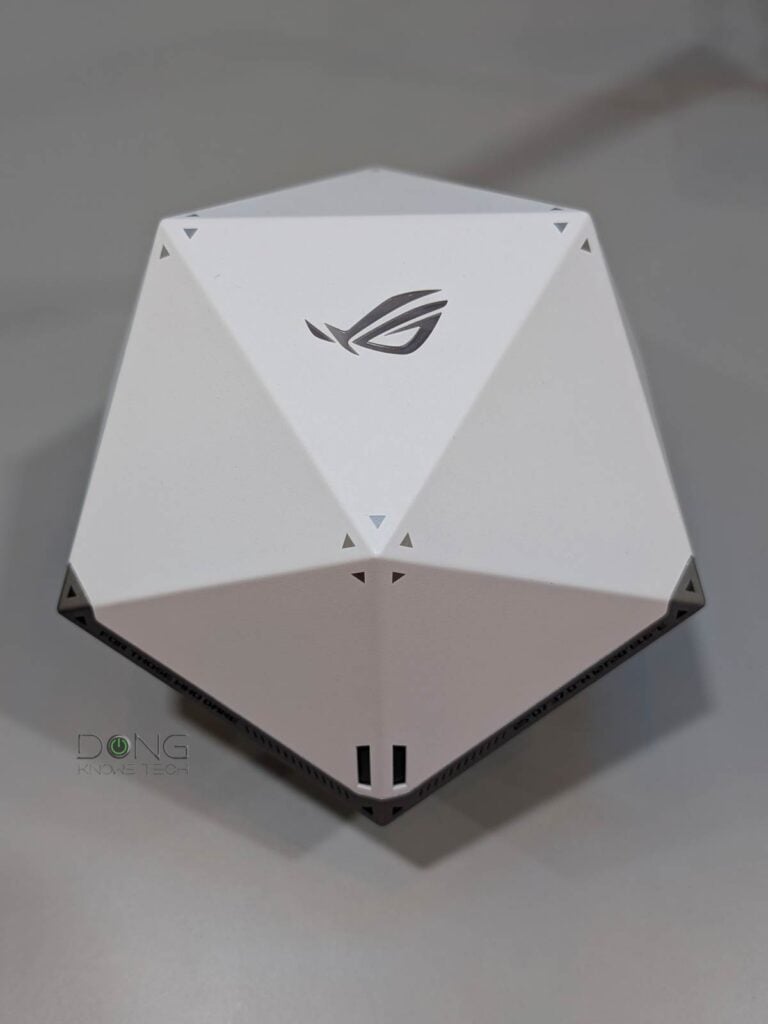
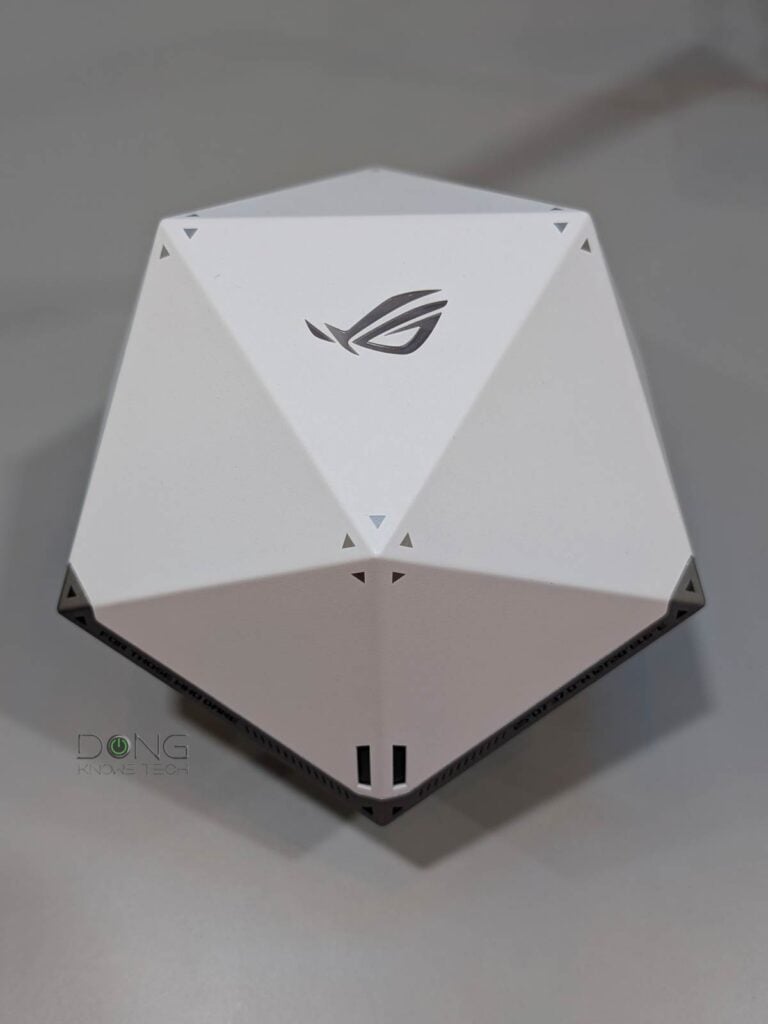
With that, this post will talk about its successor: Wi-Fi 8. This upcoming standard became almost a real thing with the NeoCore concept router ASUS is showcasing at CES 2026, coinciding with Broadcom’s announcement of its second round of Wi-Fi 8 chips, following the first round in mid-October last year, which followed Qualcomm’s announcement earlier during the year.
This post will explain Wi-Fi 8 in simple terms. However, the biggest takeaway is that it’s not meant to replace Wi-Fi 7. Instead, you can think of Wi-Fi 8 as the enhanced version designed to deliver the performance of the previous standard more reliably.
And that’s a good thing because Wi-Fi 7 itself is still very new.
What is Wi-Fi 8?
Technically, Wi-Fi 8 is the friendly name for the IEEE 802.11bn Wi-Fi standard that comes after 802.11be (Wi-Fi 7). That aside, in a sentence: Wi-Fi 8 is an enhanced, backward-compatible version of Wi-Fi 7 with a focus on Ultra High Reliability.
Ultra High Reliability is the key
Unlike previous Wi-Fi generations, which focused on progressively higher bandwidth (faster connection speeds), Wi-Fi 8 is all about reliability.
Specifically, it has no fundamental change in the frequency specs to increase the bandwidth. Instead, it focuses on what matters: the ability to reliably connect at the speeds already specified by the previous standard.
While not all of its details are available, it’s safe to say that Wi-Fi 8 is all about “Ultra High Reliability” (UHR) as the phrase is part of the new standard’s moniker.
And all that makes sense.
For one, the current theoretical speeds of Wi-Fi 7 (as well as Wi-Fi 6) are already breakneck. However, in real-world use, most existing Wi-Fi devices rarely achieve even half of the theoretical speed, as shown in the table below.
Wi-Fi standards and their real-world bandwidth
| Standard (name) |
Debut Year | Channel Width (in MHz) and Theoretical Speed (in Mbps) per Stream (rounded numbers) |
Max Number of Streams Used in Clients (Max Speed Theoretical(•) /Real-world) |
Security | Bands | Status |
| 802.11b | 1999 | 20MHz/11Mbps | Single-stream or 1×1 (11Mbps/˜6Mbps) |
Open WEP |
2.4GHz | Obsolete |
| 802.11a | 2000 | 20MHz/54Mbps | 1×1 (54Mbps/˜30Mbps) |
Open WEP |
5GHz | Obsolete |
| 802.11g | 2003 | 20 MHz/54Mbps | 1×1 (54Mbps/˜35Mbps) |
Open WEP |
2.4GHz | Obsolete |
| 802.11n (Wi-Fi 4) |
2009 | 20MHz/75Mbps 40MHz/150MBps |
Quad-stream or 4×4 (600Mbps/˜400Mbps) |
Open WEP WPA |
2.4GHz, 5GHz, Dual-band |
Legacy |
| 802.11ac (Wi-Fi 5) |
2012 | 20MHz/108Mbps 40MHz/217Mbps 80MHz/433Mbps |
4×4 (1732Mbps/˜1000Mbps) |
Open WPA WPA2 |
5GHz, Dual-band, Tri-band(••) |
Common (Phasing out) |
| 802.11ad (WiGig) |
2015 | 2.16GHz/multi-Gigabit | n/a | Open WPA WPA2 |
60 GHz | Obsolete |
| 802.11ax (Wi-Fi 6) |
2019 | 20MHz/150Mbps 40MHz/300Mbps 80MHz/600Mbps 160MHz/1200Mbps |
Dual-stream or 2×2 (2402Mbps/˜1500Mbps) |
Open WPA WPA2 WPA3 |
2.4GHz 5GHz Dual-band, Tri-band(••), |
Common |
| 802.11axe (Wi-Fi 6E) |
2021 | 20MHz/150Mbps 40MHz/300Mbps 80MHz/600Mbps 160MHz/1200Mbps |
2×2 (2402Mbps/˜1500Mbps) |
OWE WPA3 |
6GHz, Dual-band, Tri-band, Quad-band(••) |
Common |
| 802.11be (Wi-Fi 7) |
2023 | 20MHz/225Mbps 40MHz/450Mbps 80MHz/730Mbps 160MHz/1.45Gbps 320MHz/2.9Gbps |
2×2 (5800Mbps/˜3000Gbps) |
OWE WPA3 |
6GHz, 5GHz, 2.4GHz, Dual-band, Tri-band, Quad-band(•••) |
Common (Latest) |
| 802.11ah (Wi-Fi HaLow) |
2024 | 1MHz 2MHz 4MHz 8MHz 16MHz |
(85Mbps to 150Mbps) | OWE WPA3 |
900MHz | Emerging |
| 802.11bn (Wi-Fi 8) |
2028 (estimate) |
The same as Wi-Fi 7 in terms of bandwidth, frequencies, and security | Upcoming | |||
(•) The absolute theoretical bandwdith of the band or speed of a connection to a single client in an ideal connection before interference, signal degradation, and hardware incompatibility are taken into account. Depending on the number of streams and channel width in use, this theoretical ceiling speed is generally lower, often by a factor of two. Discount this ceiling number by another 30% or 60% to get real-world bandwdith, then divide it by the concurrent clients to get the real-world sustained rates.
(••) The 5GHz band is split into two portions as sub-bands.
(•••) The 5GHz or 6GHz band is split into two portions as sub-bands.
So, in terms of raw bandwidth, expect Wi-Fi 8 to have the same as Wi-Fi 7. What makes the new standard better is that it’ll likely actually deliver that, giving users a higher chance of connecting reliably at high real-world rates, especially at the far end of an access point’s range—the “edge”.
Wi-Fi 8’s new features
To fulfill the UHR promise, Wi-Fi 8 brings the following new key features:
- Inter-AP Coordination: Coordinated Spatial Reuse (Co-SR) and Coordinated Beamforming (Co-BF), where access points dynamically adjust transmit power and collaboratively direct signal beams to targeted devices to reduce latency and increase throughput.
- Congestion Avoidance: Dynamic Sub-Channel Operation (DSO), Non-Primary Channel Access (NPCA), and Dynamic Bandwidth Expansion (DBE) enable spectrum access by avoiding congestion and providing real-time bandwidth allocation, thereby improving throughput and reducing latency even in the most demanding environments.
- Range Enhancements: Extended Long Range (ELR) and Distributed Resource Units (dRu) to expand coverage and maintain strong connections in large homes, multi-level buildings, and outdoor IoT deployments—ensuring reliable performance at the edge.
- Seamless Roaming: Ensures uninterrupted experiences as devices move between access points, while maintaining ultra-low latency.
- Enhanced Modulation Coding Schemes (MCS): This feature provides higher throughputs at typical signal-to-noise ratios (SNR), offering refined rate gradations, smoother transitions, and improved overall connection stability.
So, on the performance front, the gist is that Wi-Fi 8 makes the Wi-Fi 7 dream come true. But that’s only when you use a Wi-Fi 8 access point with Wi-Fi 8 clients, which won’t be the case for many years.
That brings us to the next thing to know about Wi-Fi 8: compatibility.
Backward compatibility
It’s safe to say that Wi-Fi 8 is backward-compatible, just as previous Wi-Fi standards are.
Specifically, its access points will be able to host devices on older standards as long as they support modern security requirements, just as Wi-Fi 7 access points do.
Things remain to be determined, but generally, you can expect devices with Wi-Fi 5 (Wave 2) or later to connect without issues. Additionally, Wi-Fi 8 clients will be able to connect to access points of any older standard.
Notes on Wi-Fi and backward compatibility
Via extensive real-world Wi-Fi testing, it’s evident that newer isn’t always better when it comes to compatibility.
Specifically, Wi-Fi receivers (a.k.a. clients or devices) often work better with a Wi-Fi access point (standalone or housed in a router) of the same or an older standard than with one of a newer standard. The further away in generations, the worse things become.
For example, a Wi-Fi 4 client generally gets a faster connection speed from a Wi-Fi 4 router than a Wi-Fi 5 or Wi-Fi 6 access point of the same tier, and it can’t even connect to a Wi-Fi 7 access point.
However, the other way around is hardly an issue. You can connect a Wi-Fi 7 client to a Wi-Fi 4 or even older point, at the maximum supported performance.
In other words, Wi-Fi backward compatibility is often a concern on the broadcasting end, not the receiving end. Specifically, the older the Wi-Fi standard of an access point, the less likely it is to have compatibility issues.
Still, again, as with any Wi-Fi revision, you’ll need Wi-Fi 8 throughout (or at least Wi-Fi 7 clients) to enjoy its full benefits.
Wi-Fi 8: “Built for the age of AI”
Like all previous Wi-Fi standards, Wi-Fi 8 is about getting devices connected locally (and to the Internet) without network cables. And all that implies.
As it happens, Wi-Fi 8 emerges as the world is going through what I’d call an “AI fervor,” with many tech devices incorporating AI as a feature or to stay relevant, so the new standard simply can’t avoid “AI”. The truth is, data exchange is part of AI’s core functionality, and better Wi-Fi connections only help.
That said, all Wi-Fi hardware vendors emphasize how Wi-Fi 8 is “built for AI” or made for “seamless AI experiences”. And there’s some truth in that. However, the point here is that Wi-Fi 8 will likely help devices to connect better, AI or not.
Availability and the takeaway
Wi-Fi 8 is unlikely to be ratified until late 2028. As a result, we don’t yet have all the details.
However, as with previous versions, hardware is often available before the standard is officially ratified. Considering ASUS just unveiled its first concept Wi-Fi 8 router at CES 2026, the first Wi-Fi 8 router is likely to be available sometime in 2027.
But there’s no rush—it’s not like we need the latest Wi-Fi standard to get connected. And older Wi-Fi versions, as old as Wi-Fi 5, will remain relevant for years to come.
In any case, check back for more. In the meantime, there’s no need to delay your planned purchase of a Wi-Fi router (or system), as connectivity availability is always more important than the specific connection method. Just as Wi-Fi 7 is not yet fully ready today, Wi-Fi 8 will need many years to mature and be widely supported.
One thing is for sure: with Wi-Fi 8 now on the horizon, Wi-Fi 7 hardware will gradually become less expensive. And that’s always a good thing.