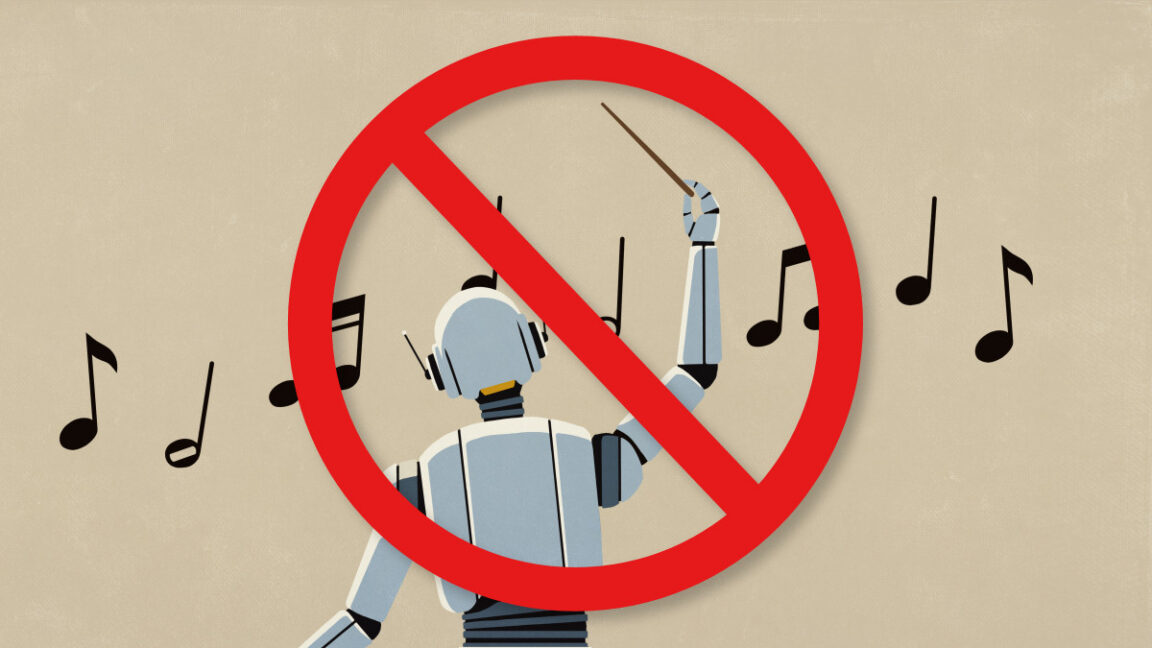
On Tuesday, Bandcamp announced on Reddit that it will no longer permit AI-generated music on its platform. “Music and audio that is generated wholly or in substantial part by AI is not permitted on Bandcamp,” the company wrote in a post to the r/bandcamp subreddit. The new policy also prohibits “any use of AI tools to impersonate other artists or styles.”
The policy draws a line that some in the music community have debated: Where does tool use end and full automation begin? AI models are not artists in themselves, since they lack personhood and creative intent. But people do use AI tools to make music, and the spectrum runs from using AI for minor assistance (cleaning up audio, suggesting chord progressions) to typing a prompt and letting a model generate an entire track. Bandcamp’s policy targets the latter end of that spectrum while leaving room for human artists who incorporate AI tools into a larger creative process.
The announcement emphasized the platform’s desire to protect its community of human artists. “The fact that Bandcamp is home to such a vibrant community of real people making incredible music is something we want to protect and maintain,” the company wrote. Bandcamp asked users to flag suspected AI-generated content through its reporting tools, and the company said it reserves “the right to remove any music on suspicion of being AI generated.”
As generative AI tools make it trivial to produce unlimited quantities of music, art, and text, this author once argued that platforms may need to actively preserve spaces for human expression rather than let them drown in machine-generated output. Bandcamp’s decision seems to move in that direction, but it also leaves room for platforms like Suno, which primarily host AI-generated music.
Two platforms, two approaches, one flood
The policy contrasts with Spotify, which explicitly permits AI-generated music, although its users have expressed frustration with an influx of AI-generated tracks created by tools like Suno and Udio. Some of those AI music issues predate the latest tools, however. In 2023, Spotify removed tens of thousands of AI-generated songs from distributor Boomy after discovering evidence of artificial streaming fraud, but the flood just kept coming.