Expanding to Vietnam is compelling, and the process is more straightforward than many would expect
When we talk about the top international markets to enter, our minds often go to major economies like China, Japan and the US. But one country has slowly emerged as a potential economic powerhouse: Vietnam.
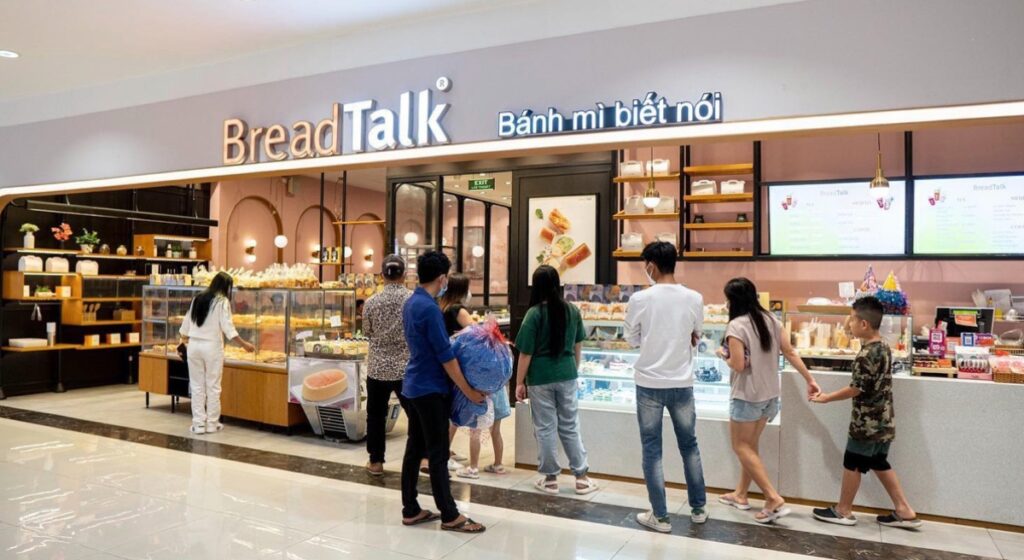
With multiple Singaporean brands making their entry into the market, including household names like Charles and Keith, BreadTalk and Benjamin Barker, it’s a testament to how the country has presented business opportunities to international players.
With that in mind, could Vietnam be the next stop for entrepreneurs in Singapore to enter? To find out, Vulcan Post looked into what it actually takes to set up a business in Vietnam, and the process is more straightforward than many Singaporean entrepreneurs might expect.
What makes Vietnam attractive to Singaporean businesses?
Vietnam serves as an attractive market for Singaporean businesses due to its strong economic performance. An ICIS report showed that the country reported an 8.02% GDP growth in Q4 2025, making it the second-highest reading between 2011 and 2025.

Several Singaporean brands have spotted Vietnam’s potential as early as decades ago. Homegrown shoes and bag brand Charles and Keith first broke through the market in 2016 with an outlet at Saigon Centre in Ho Chi Minh. Today, the company has 33 operational outlets in the country, as per its website.
BreadTalk, another well-loved Singaporean brand, first expanded to Vietnam in 2010 via a franchising model. 16 years later, the company has 26 outlets across the country.
And Vietnam is making it clear that it welcomes international trade and investment. To Lam, the General Secretary of the Communist Party of Vietnam, has pledged on Jan 20, 2026, an annual economic growth of over 10% for the year, which can be achieved if the country cuts the red tape and expands global trade to protect its independence and national interests.
To noted that while the 20% trade tariff imposed by the Trump Administration has not restrained the growth of Vietnamese exports to the United States, it aims to boost trade relations with other partners as the impact of US duties is expected to come in the coming months.

As such, Vietnam has strengthened close relationships with its neighbours, including Singapore, in trade and exchange of talent. EnterpriseSG’s Global Innovation Alliance network has enabled more than 50 Singaporean entrepreneurs to collaborate with Vietnam-based partners across several sectors, including real estate, healthcare, smart mobility and education.
This also includes the Vietnam—Singapore Industrial Parks, which were set up to become a key satellite industrial park. According to a report by the Straits Times in Mar 2025, the parks have collectively attracted over US$23 billion (S$30.8 billion) in investments and supported more than 320,000 jobs in the country.
Vietnam also boasts a strong and young workforce of fresh talent contributing to high-growth sectors such as manufacturing, digital transformation and green tech. A 2023 report revealed that the country has over 57,000 IT graduates entering the market annually, joining about 530,000 active professionals.
Based on the Shortage Occupation List and subsequent reports by LinkedIn and the Ministry of Manpower, roles including data scientists and software developers have one of the highest numbers of vacancies in Singapore, showing that there is still a demand for tech despite the slew of layoffs in recent years.
However, a survey done by Manpower Group revealed that 77% of APAC companies surveyed found it difficult to hire skilled talent, of which 32% of that consists of IT and Data skills—the largest category over engineering (27%) and sales and marketing (27%). This means that while there is demand, the supply of quality talent isn’t able to meet industry needs.
With the Singapore tech industry continuing to grow in demand and scale, investing in talent in Vietnam might plug the gaps that many businesses need.
Where to set up & potholes to be aware of

While Vietnam is home to many idyllic cities, including Sa Pa and Hoi An, the country has two main business hubs: Hanoi and Ho Chi Minh City.
Karen Ng, Regional Head of Expansion for Asia at Human Resource consultancy Deel, shared that choosing where to set up often hinges on the business’s needs and budgets. For example, Hanoi, Vietnam’s capital, is ideal for skilled, policy-driven sectors due to its proximity to government offices. On the other hand, Ho Chi Minh City is known as the country’s stronghold for finance and tech, which is a better fit for startups.
Vietnam also offers minimum wages for workers, which are regulated and vary by region. Minimum wages offered in Ho Chi Minh City and Hanoi are typically higher than in rural areas like the Mekong Delta, to reflect the differences in living costs.
That said, there are a few potholes to watch out for. Karen shared that setting up a wholly foreign-owned enterprise can take months and cost up to over VND 906 million (roughly S$44,234.45) in legal, tax and payroll setup fees at most, which heavily slows down the process.
Karen added that language barriers can also increase compliance risks, making it more challenging to prepare the correct legal documents and risk misclassifying workers or missing the monthly tax filing deadlines. These issues often result in penalties, added delays and higher costs incurred.
As such, businesses can choose to be listed as an Employer of Record, which allows them to hire and onboard local talent without establishing a legal entity and removing regulatory and administrative barriers.
According to Glints, an Employer of Record (EOR) is defined as a third-party organization that employs and pays individuals on behalf of another business. EOR services allow companies to hire employees domestically or internationally without establishing a legal presence or dealing with complex compliance requirements in the employee’s country.
“EORs manage payroll, taxes, employment contracts, and ongoing compliance, allowing businesses to scale in Vietnam faster, more efficiently, and with lower risk,” added Karen.
An emerging market that Singaporeans should watch out for

Like any other market, setting up a business in a foreign territory comes with its own set of complex challenges. Nevertheless, Vietnam’s growing infrastructure and economy provide multiple opportunities across different sectors, from manufacturing to technology.
Major international corporations have also set up a headquarters in the country and global tech giants such as Samsung continue to rely on Vietnam as a manufacturing and research source. The Singapore government has continued to maintain amicable bilateral partnerships with Vietnam outside of ASEAN, as the island continues to be one of Vietnam’s most important foreign investors.
With the multiple opportunities across various sectors, it would be unwise for one to dismiss Vietnam as a potential market to expand and grow. Perhaps, the country might become the next “Asian Tiger” after China?
- Read more stories we’ve written on Singaporean businesses here.
Also Read: He left Singapore’s F&B grind for Bangkok—now, he runs a chicken rice chain with five outlets
Featured Image Credit: Freepik