The future is here. Sort of.
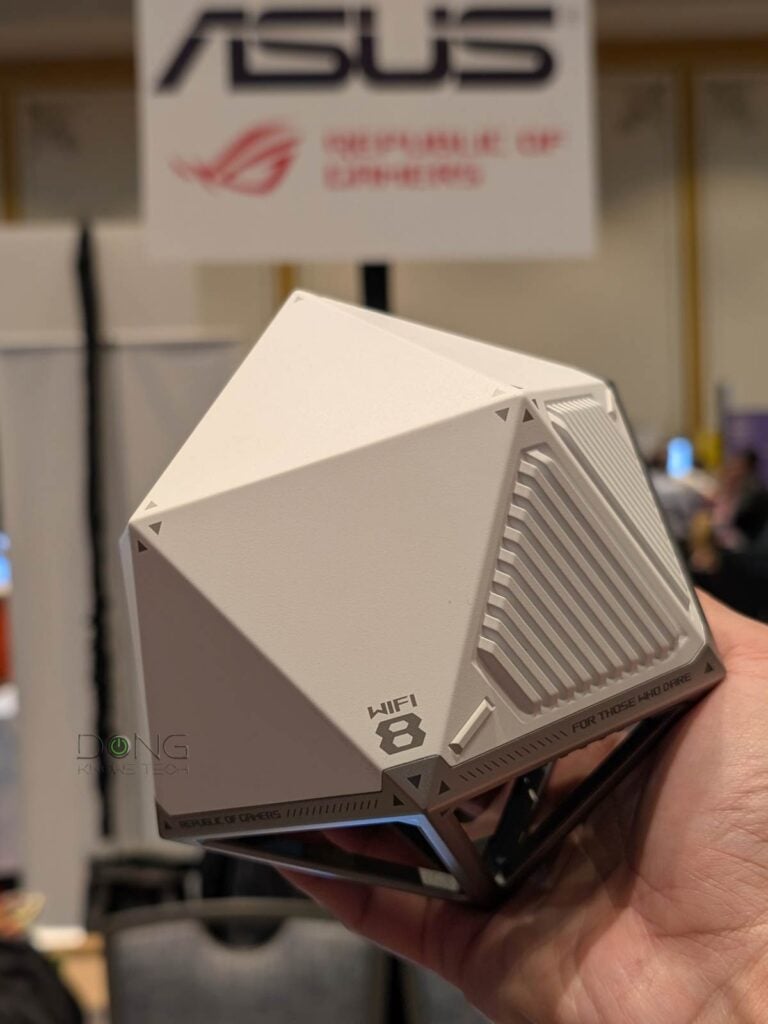
Today, ASUS announced the ROG NeoCore, its “first” Wi-Fi 8 router at CES 2026. Before you get too excited, there’s a caveat: unlike previous announcements, such as the Wi-Fi 7 GT-BE19000AI at the previous CES, which became available at the end of 2025, the NeoCore is a concept router, meaning it will likely not become an actual product, or if it does, a very different one from what it was shown at the show.
However, given that Wi-Fi 8 is currently at such an early stage, its existence alone is significant. And its design is intriguing, in a good way.
ASUS ROG NeoCore: A new design for a new Wi-Fi standard
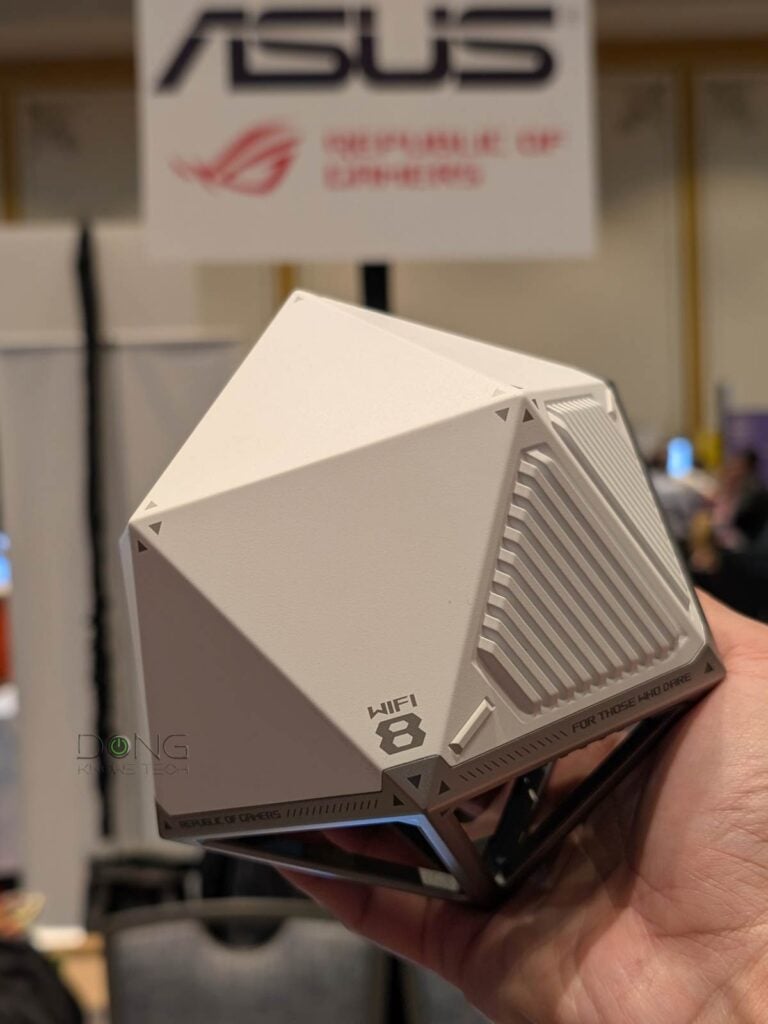
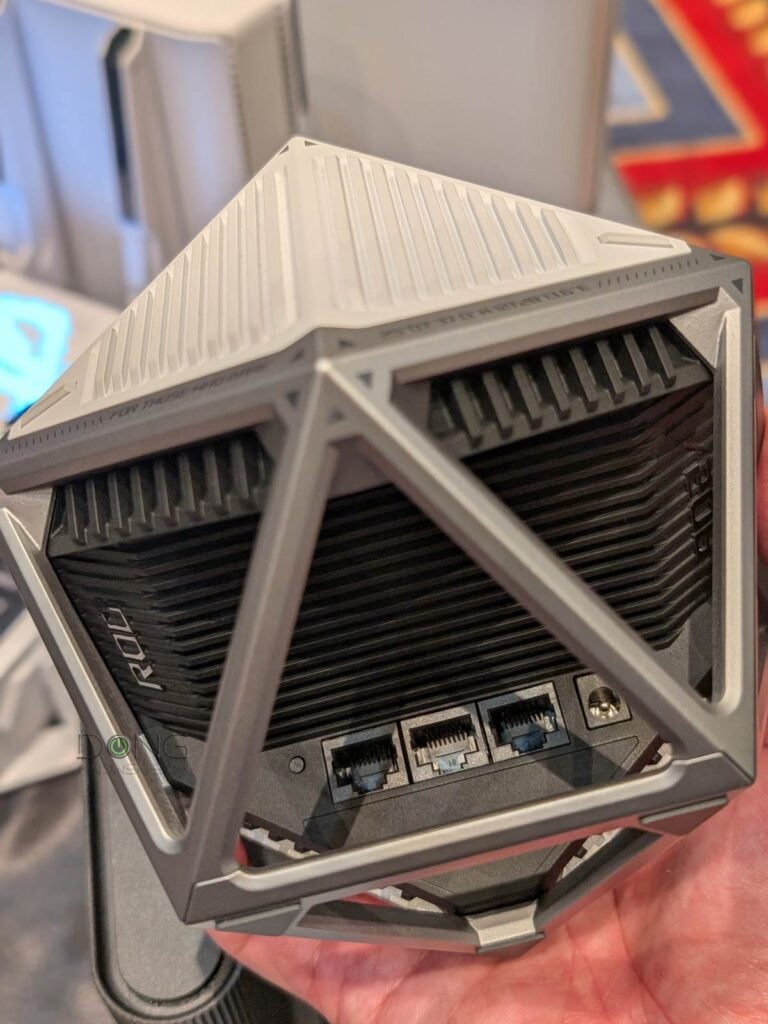
The NeoCore concept router looks like no other ASUS router I’ve seen: it’s a relatively compact 12-sided cube with a hollow underside for access to its three network ports. ASUS says the number of ports will likely increase in the production version, and chances are at least two, if not all of them, will be 10Gbps.
Other than that, on the inside, apart from the appropriate support for Wi-Fi 8, the NeoCore is meant to be a gaming router, judging from the ROG notion in its name. On this front, it’s a far cry from the exciting “dead spider” design of other flagship ROG routers, such as the GT-BE98 Pro or GT-BE19000AI.
Again, it’s safe to say a lot of things will change by the time you can get an actual Wi-Fi 8 router, this NeoCore or otherwise. Still, with this concent router, ASUS showed its desire to create an entirely new design, something more streamlined and aesthetically pleasing, in line with what the new Wi-Fi standard has in store.
ASUS’s Wi-Fi 8 demo: Impressive real-world performance
In addition to the NeoCore, ASUS also demoed Wi-Fi 8’s real-world performance at the show using circuit boards based on the standard’s draft specification to represent both sides of a Wi-Fi 8 connection. The result? A clear improvement compared to Wi-Fi 7 in real-world scenarios.
It’s worth noting that Wi-Fi 8 doesn’t aim to exceed Wi-Fi 7 in theoretical bandwidth. Instead, it focuses on connection quality. In other words, it’s meant to yield faster real-world performance at Wi-Fi 7’s ceiling speeds than Wi-Fi 7 hardware.
ASUS’s demo showed just that: Wi-Fi 8 draft hardware could deliver up to 2X higher mid-range throughput, 2X broader IoT coverage, and up to 6X lower latency via smarter multi-AP/multi-client operation than Wi-Fi 7 with similar specs.
Ultra-high reliability for everyday connectivity
Through that lab-based experience, ASUS concluded that Wi-Fi 8 reduces speed degradation over range and makes connections more stable, enabling “smooth performance” in less-than-ideal environments. Additionally, Wi-Fi 8 enhances two-way communication for low-power devices, such as bright lights and controllers, ensuring steady connections for all devices.
According to ASUS, the existing Wi-Fi standards (including Wi-Fi 7) are often evaluated under best-case scenarios and therefore fall short in real-world use. Consequently, they often fall short in meeting users’ expectations in modern apartment buildings or densely populated neighborhoods. Wi-Fi 8 differs from the rest by having intelligent spectrum coordination, higher spectrum efficiency, and better dynamic scheduling to maintain fast performance and reliability even in less-than-ideal environments.
The takeaway
Again, chances are there won’t be an actual Wi-Fi 8 router, the NeoCore, or others until late 2026, if not early 2027. However, what ASUS had to show at CES 2026 suggests the new standard is exciting, and it might be adopted even faster than Wi-Fi 7. And faster and more reliable Wi-Fi is never a bad thing.