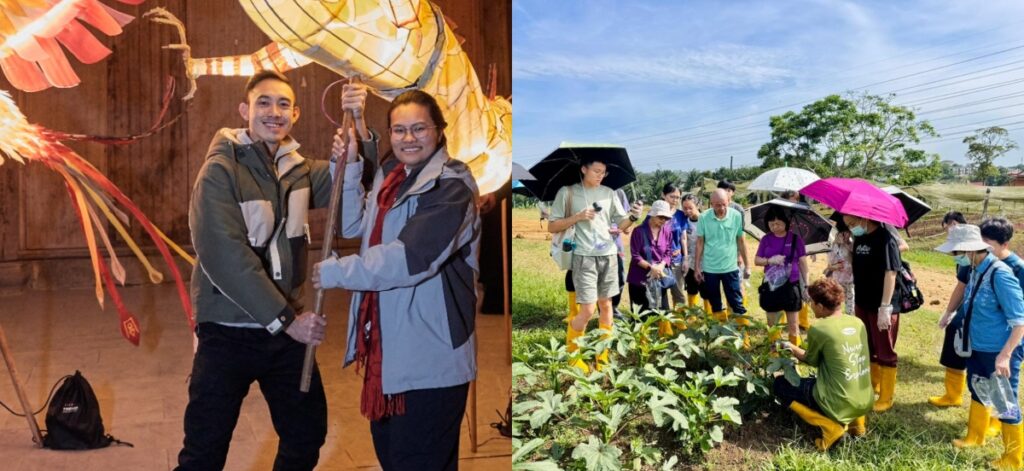
Why Singaporean travellers are choosing intentional travel, and paying more for it
For years, travel was about efficiency: tick off as many sights as you can, squeeze as much value as possible into a fixed number of days, and move on quickly to the next destination. But for a growing group of travellers, especially post-pandemic, that formula no longer satisfies.
Instead, more people are turning towards intentional travel, a term that refers to curated journeys designed beyond the typical packaged tours. Such tours place importance on meaning, depth, and mindfulness at their core. These travellers are willing to slow down, return to the same place multiple times, and even pay a premium—not for luxury, but for care, context, and connection.
Companies like V Folks, Kitabi Travel, and SoulTrips by DrukAsia are meeting this demand, offering plant-based culinary immersion, hands-on cultural craft, and spiritually mindful journeys. We spoke to the founders to uncover why Singaporeans are increasingly drawn to travel that moves beyond ticking boxes — and how small, curated trips are reshaping what it means to explore the world.
V Folks: Plant-Based Travel with purpose

One company leaning firmly into values-led travel is V Folks, a curated travel company founded in September 2023 by 39-year-old Jay Yeo. Specialising in premium vegetarian and vegan travel, V Folks builds itineraries around cultural immersion, hands-on experiences, and slower-paced journeys. While plant-based travellers form the core audience, 25% of its guests are non-vegetarians, drawn by the quality of food and the depth of experiences offered.
Before starting V Folks, Jay worked across finance, project coordination, and volunteering, including with Youth Corps Singapore National Council. A post-COVID period of soul-searching and backpacking – combined with his own plant-based lifestyle – led a close friend to suggest he channel his talent for planning meaningful trips into a full-fledged travel company catered to people with plant-based diets.
“At its core, V Folks was started to breathe a fresh air of life into people worn down by the daily grind,” Jay shared.

Jay believes V Folks is Singapore’s first travel company dedicated entirely to plant-based itineraries. Previously, the co-founder shared that vegetarian/vegan travellers often relied on Malaysia-based operators or mainstream agencies that struggled to deliver on dietary and experiential needs. While initial scepticism about V Folks existed, word-of-mouth quickly grew, with many customers returning alongside family and friends.
Today, V Folks runs two to four Malaysia trips monthly, ranging from day tours to a spanning a few days, apart from regular overseas departures to Thailand, Vietnam, and China. Guests range from their 30s to 70s, with more than half being over their 50s, plus a growing number of families and younger travellers drawn to hiking and nature-based experiences. Marketing is produced in both English and Chinese to reach a diverse clientele, including members of churches and temples, reflecting broader shifts towards health-conscious, plant-based travel.
Even V Folks’ short trips carry depth: a one-day Kulai trip under $90 includes a visit to the Hakka association to learn local history, while overseas itineraries feature tea-plucking in Hangzhou or family-style cooking classes in Guangzhou to revive hands-on bonding often lost in urban life.

What sets V Folks apart is its unhurried pace and immersive approach, Jay shared. In Yunnan, for example, guests visit the Naxi tribe, entering the home of a former village chief—a space rarely accessible to typical tour buses. Travellers can choose to dress in traditional attire, learn Dongba scripts, and participate in ancient food-making practices. Tie-dyeing with the Bai ethnic tribe allows guests to leave with a tangible, handmade memory rather than a mere souvenir.
“Being younger than mainstream travel planners, we are more adventurous in exploring deeper corners and experiences that most tourists miss,” Jay explained.
Every itinerary is personally scouted by Jay and his co-founder, from restaurants that cater to strict dietary requirements to immersive cultural activities that foster connection. Local partners and guides play a crucial role; their energy and vitality shape the guest experience, making even routine moments meaningful.
Private trips are a growing segment, ranging from family getaways during school holidays to spiritual groups or corporate bonding trips, all aligned with the plant-based philosophy. Across all journeys, mindfulness and conscious intention guide planning, ensuring that participants return refreshed, invigorated, and shifted in perspective.
Jay shared that although his tours are typically 10–15% pricier than conventional tours, V Folks emphasises transparency and value. Jay shared that there are no hidden charges or coerced spending stops, with all costs included upfront. For example, a standard eight-day trip starts at S$1,899.
Looking ahead, V Folks plans to expand short getaways and hiking-focused itineraries, reflecting Jay’s view that modern society’s lethargy and burnout create a growing need for travel that reconnects people with nature, community, and themselves.
SoulTrips by DrukAsia: Travel for the soul

If V Folks reflects values-led living, SoulTrips by DrukAsia embodies the emotional and spiritual dimension of travel — what its founder calls “travel for the soul.”
Founded in 2010 by Joni Herison, DrukAsia began by promoting Bhutan, a country that resists checklist tourism and encourages travellers to slow down, reflect, and reconnect. According to Joni, back then, only around 200 Singaporeans visited Bhutan annually; today, that number has grown to 7,000–8,000, helped by direct flights and DrukAsia’s role as General Sales Agent for Drukair since 2012. About 95% of DrukAsia’s journeys to Bhutan are private tours, while its public tour groups are capped at 10–12 guests.
For Joni, success is measured not in numbers but in transformation. According to Joni, many travellers often return with a slower perception of time, renewed priorities, and a lighter emotional state. Bhutan’s old-school depth and authenticity – from centuries-old suspension bridges to passionate local guides – are central to this shift.

Since 2010, DrukAsia has brought 21,000–22,000 travellers to Bhutan, ranging from young adults to retirees, often travelling as families. Many describe profoundly moving moments, from quiet reflection to tears at Tiger’s Nest, overwhelmed by Bhutan’s unfiltered energy. Some experiences have even been life-changing, such as a traveller leaving her consultancy job to work with Mountain Hazelnuts and later co-creating hands-on agricultural tours. An 11-day trip to Bhutan starts at S$4,890 per person, excluding flights.
“I think that is the travel that we prefer: to bring people surprises that they didn’t even expect on a trip… sometimes you may even bump into the King of Bhutan and have a short conversation with him,” founder Joni said.
By 2023, in response to demand for transformative journeys beyond Bhutan, the company launched SoulTrips, offering curated experiences in Asia, Central Asia, and Europe. Each itinerary takes six months to a year to plan, with moments of surprise deliberately built in to preserve the joy of discovery.
SoulTrips works closely within local ecosystems, collaborating with tourism boards, guide associations, and communities. Apart from their own curated tours, SoulTrips also partners with international travel agency Europamundo, allowing travellers to explore Europe with guided flexibility rather than ticking off sights on a checklist.

Closer to home, SoulTrips’ S$870 Penang: Community & Wellbeing Tour (4D3N) blends heritage, tradition, and wellbeing in Malaysia’s multicultural island state. Organised with the Ningpo Guild Singapore, the itinerary frames Penang’s social fabric as a living system of care—from clan houses and temples to philanthropic institutions and Chinese associations. Travellers explore historic sites such as Cheong Fatt Tze Mansion (aka Blue Mansion) and Penang Buddhist Association, participate in traditional Chinese medicine sessions, and experience ancestral clan heritage — all in a deliberately slower, reflective way.
“People ask why Singaporeans would want to go to Penang with us when they can just eat Penang food,” added Florence Ang, Marketing Director. The answer is the difference: understanding why places matter, not just what they offer.
Mental wellness, for SoulTrips, isn’t a retreat added on but cultivated naturally through mindful presence in each trip, Joni said. Each journey sparks curiosity, joy, and awareness of the moment, helping travellers reconnect with themselves, others, and the world around them.
Looking ahead, SoulTrips is expanding thoughtfully, with philanthropy-driven journeys to Bhutan and a holistic wellness partnership with Oriental Remedies launching in 2026. Travellers will receive pre- and post-trip health assessments, framing wellness as a journey rather than a destination. Across all initiatives, the ethos remains the same: to move travellers away from ticking boxes and towards journeys that leave them lighter, more curious, and quietly transformed.
“That’s the work of human being, right? We should just be being in the moment but we end up becoming human doing, so that our 24 hours a day is doing things because that’s what we are trained to do,” said Florence.
Kitabi Travel: Curating Japan beyond the guidebook

Another agency embracing intentional, deeply curated travel is Kitabi Travel, founded in 2023 by Heidi Tan, the former founder of FLOR Patisserie. A trained pastry chef, Heidi ran FLOR for 15 years, crafting Japanese-inspired pastries that celebrated seasonal fruits and building close relationships with Japanese farms and artisans — informal connections that now form the backbone of Kitabi Travel’s unique itineraries.
Kitabi Travel grew organically from a 2019 baking class in collaboration with Japanese pastry chefs in FLOR, organised in partnership with the Kobe prefectural government that wanted to share Japanese fruits in Singapore. Guests were fascinated by the artistry behind the Japanese seasonal pastry, and in order to have access to fresher ingredients, suggested food trips to Japan be held instead.
Even when the collaboration paused during COVID-19, demand for more collaborations persisted after the pandemic.
Then, in the spring of 2023, Kitabi Travel was officially born, with Heidi hosting the first overseas tour to Kobe, where travellers made and sampled a range of traditional Japanese sweets.
In sweets tours, participants immersed themselves in making sweets such as cookies, cakes and other daifuku (sweet rice cakes). Other tours that Kitabi Travel offers include Sake & Food, Food & Crafts, Fermented Food across Japan.
Rather than relying on traditional travel agents, Kitabi partners with a Japan-based PR specialist embedded in the local F&B scene, granting clients access to experiences most tourists never see: learning directly from professional chefs inside their kitchens, reserving entire small restaurants, or visiting rural pottery studios where artisans teach personally. Heidi personally scouts venues, liaises with artisans, and with her fluency in both Japanese and English, ensures language and cultural barriers are bridged.

The philosophy at Kitabi Travel is simple: immersive, out-of-the-ordinary experiences. Tours travel in small groups, keeping interactions intimate and flexible. Guests might make miso in Kobe and take it home to ferment, harvest tea leaves in Nagoya under a farmer’s guidance, or craft pottery in countryside studios. Each activity is tactile, memory-rich, and designed to engage all the senses, leaving participants with lasting personal connections to both craft and culture.
“We will be drinking tea, living tea, breathing tea… it’s about the whole process, not just the end product,” Heidi explains.
Since its inaugural spring tour in 2023, Kitabi has expanded to seasonal offerings such as early summer tea harvest and autumn pottery tours. By 2025, Kitabi had hosted 152 guests across nine tours, with nearly half returning for a second experience. The agency attracts higher-income travellers seeking depth, culture, and authenticity over standard sightseeing. For example, the five-day Kagoshima tour, priced at $4,600, typically attracts older travellers in their 30s to 50s seeking a more luxurious, refined experience.
Heidi also noted that Japanese prefectural governments have increasingly shown strong interest in Kitabi’s tours, which they perceive attract mindful travellers who demonstrate respect for local culture — a contrast to mass, low-cost tourism.
Running intimate tours requires careful planning: Japan’s punctuality culture, inaccessible rural locations, and traditional ryokan accommodations demand pre-trip guidance and flexible arrangements, such as private onsen windows to balance comfort with authenticity.
Each itinerary is designed to encourage curiosity, reflection, and personal engagement, Heidi shared. Guests aren’t just visiting Japan — they’re meeting people, sharing stories, and understanding local traditions in ways that foster deeper appreciation.

Looking ahead, Kitabi is launching a Kids Camp in rural Kagoshima in September, bringing parents and primary school children together for bamboo harvesting, cooking bamboo rice, and rice planting. The program reflects the brand’s ethos: travel as education, connection, and shared growth.
“I want to see more mindful Singaporeans living intentionally and appreciating nature, starting young,” said Heidi.
Reflecting on her entrepreneurial journey, Heidi shares that passion accounts for only 10% of success; the rest comes from hard work, perseverance, and knowing when to walk away from what isn’t working.
More meaning, less mileage
Across these three agencies, the message is clear: intentional travel isn’t just about doing less — it’s about doing things differently. Whether it’s tasting, crafting, hiking, or meditating, travellers are seeking experiences that leave a lasting emotional and intellectual impact rather than a collection of photos or stamps on a passport.
As travellers grow more discerning, they are choosing depth over density, meaning over mileage, and journeys that linger long after they return home. And for a growing number of them, that difference is worth paying for, in a cozier, curated group setting that prioritises connection, discovery, and mindful presence.
- Learn about V Folks here.
- Learn about DrukAsia’s SoulTrips here.
- Learn about Kitabi Travel here.
- Read more stories we’ve written on Singaporean businesses here.
Featured Image Credit: V Folks, DrukAsia, Kitabi Travel