In classrooms across the country, children are showing progress in reading, yet many students cannot tell you what those words mean, why they matter or how the text connects to their lives.
My first grade multilingual learner asked for help with an assignment that required reading the word and matching it to the corresponding picture. I assumed that my student had not read it. My student replied, “I read the word, but I don’t know what it means.”
At that moment I realized that my students were decoding but not understanding what they read. According to the simple view of reading, students must be able to decode and have linguistic comprehension to attain reading comprehension. Multilingual learners are developing language, which makes comprehension more challenging.
Data from national assessments revealed that reading comprehension outcomes have worsened nationwide (Figure 1). More students scored below proficiency in reading in the 2024 report than in the 2022 and 2019 reports (Figure 2).
Figure 1: National Assessment of Educational Progress, 2024
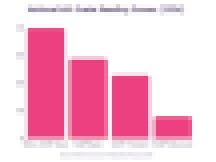
Figure 2: Trend in Eighth Grade NAEP Reading Achievement-Level Results, 2024

The sharpest declines, according to NAEP and the Department of Public Instruction, are among African American, Hispanic, Native American, and multilingual learners. The data highlights that despite widespread science of reading reforms emphasizing foundational literacy skills, minority students continue to struggle with comprehension.
Culturally and Linguistically Sustaining Practices Matter
America’s classrooms are more diverse today than at any point in history. There are over 5 million multilingual learners in the United States.
Yet science of reading curricula rarely reflect this diversity. Many curricula assume that students come from white, English-speaking, middle-class households.
Research shows students improve in reading when texts reflect their racial, cultural and linguistic identities, because culture shapes the oral language needed for comprehension. When curricula ignore students’ experiences, understanding suffers, not from lack of ability, but from lack of relevance.
Science of reading reforms have boosted decoding, but they were built for monolingual, culturally narrow classrooms.
Grounded in English-only assumptions, many science of reading curricula lack multilingual learners’ home languages and cultural knowledge, making it harder for them to comprehend texts. Decodable texts deepen this gap because they are designed to practice phonics rather than to develop rich vocabulary, complex language or connections to texts.
As a result, students may look strong on decoding data while continuing to lag in comprehension, confirming NAEP’s widening comprehension gaps even with decoding gains.
Classroom solutions
Despite these challenges, teachers have powerful tools at their disposal that do not require abandoning foundational skills. Instead, they ask us to expand our definition of literacy beyond decoding and provide instructional time for students to develop language comprehension.
1. Choose culturally representative texts
Research with African American, Latinx, Indigenous, and multilingual students shows that literature that affirms identities improves comprehension, motivation and critical thinking. Representation matters.
2. Make read-alouds a daily nonnegotiable
Read-alouds provide students with rich vocabulary and syntax, model fluent reading, and build shared background knowledge, all essential for reading comprehension. Choose read-alouds that are 2-3 levels above students’ reading levels to provide opportunities to learn new vocabulary.
3. Explicitly teach vocabulary before, during and after reading
Building vocabulary is needed for students to construct background knowledge and linguistic comprehension.
Multilingual learners and some students from lower-income backgrounds may require images or visuals to support comprehension. I discovered that students were unfamiliar with simple consonant-vowel-consonant words like “fig” or “hut.”
Additionally, vocabulary instruction is more effective when woven into the lesson rather than as an afterthought. Students also benefit from thematic units that reuse vocabulary words, which provide students with opportunities to practice new oral language.
4. Use collaborative talk structures frequently
Oral language develops language comprehension, one of the two main components necessary for reading comprehension. According to the simple view of reading framework, reading comprehension is the product of decoding words and language comprehension.
While foundational literacy science of reading curricula teach students to decode, students must engage in collaborative learning through turn-and-talks, small-group discussions and shared inquiry to develop language comprehension.
5. Allow translanguaging for multilingual learners
When students use their home languages to process ideas, compare concepts or discuss texts, comprehension deepens. It is a powerful cognitive tool, validated by decades of research in bilingual education.
Try using strategies such as identifying cognates, teaching children to use bilingual dictionaries or apps, and providing a space within the lesson for students of the same home language to brainstorm.
We Can’t Do It Alone
Teachers cannot solve the literacy crisis without the support of parents and community partners.
I recently read an article about a literacy initiative in a refugee camp, which found that sending home tablets with stories in families’ home languages increased students’ motivation and improved reading comprehension.
When parents are given tools to read with their children, regardless of language, students develop literacy skills. Teachers can improve literacy efforts at home through bilingual books, multilingual reading apps, family literacy nights, community tutoring partnerships and take-home literacy kits.
One of my most successful classroom projects was a “Bilingual Book in a Bag.” Students took home a bilingual book, a stuffed animal, creative activities and a writing journal to complete with their families. The joy students brought back to the classroom, and the growth in their writing and comprehension, proved what research has long shown: Children learn best when their languages and families are valued.
A Call for a More Humanizing Literacy Future
If we expect students to improve reading comprehension, we must move beyond narrow, English-only interpretations of the science of reading. Foundational skills matter, but decoding is only the beginning.
Children need oral language, background knowledge and cultural connections. Reading is not simply sounding out words. It is making meaning, connecting text to identity, culture and lived experience. The future of literacy depends on our willingness to honor the full humanity of every child.