
Multi-Gigabit is the term used to describe data traveling at least twice the speed of Gigabit. To experience it, we generally rely on the Multi-Gig wired network connection standard, which has multiple port grades ranging from 2.5Gbps to 10Gbps.
This post features the best 2.5Gbps Multi-Gig routers plucked from a comprehensive list of devices I’ve evaluated. These are sweet-spot hardware for those who want to enjoy Gigabit or Gig+ broadband in a relatively small home. If you need a solution for a large home, check out this top-five list of 2.5Gbps mesh systems instead.
Dong’s note: I first published this frequently revised post on December 13, 2020, and last updated it on March 5, 2028, with the latest picks.
Best 2.5Gbps Multi-Gig routers capability: The list
All routers mentioned here have at least two 2.5Gbps Multi-Gig ports, one for the WAN side and the other for the LAN. You’ll likely need a Multi-Gigabit switch to complete a faster-than-Gigabit network. So, before considering any of them, get your home wired with network cables if you haven’t already.
It’s worth noting that all of the routers below can be members of a Wi-Fi system. Specifically:
- You can add additional access points to a UniFi “router” to form a UniFi system.
- You can get multiple units of ASUS or TP-Link routers to form an AiMesh or EasyMesh system.
However, they are all designed to be first and foremost standalone routers.
5. TP-Link Archer GE650 (Wi-Fi 7): 2x 5GBASE-T and 3x 2.5GBASE-T
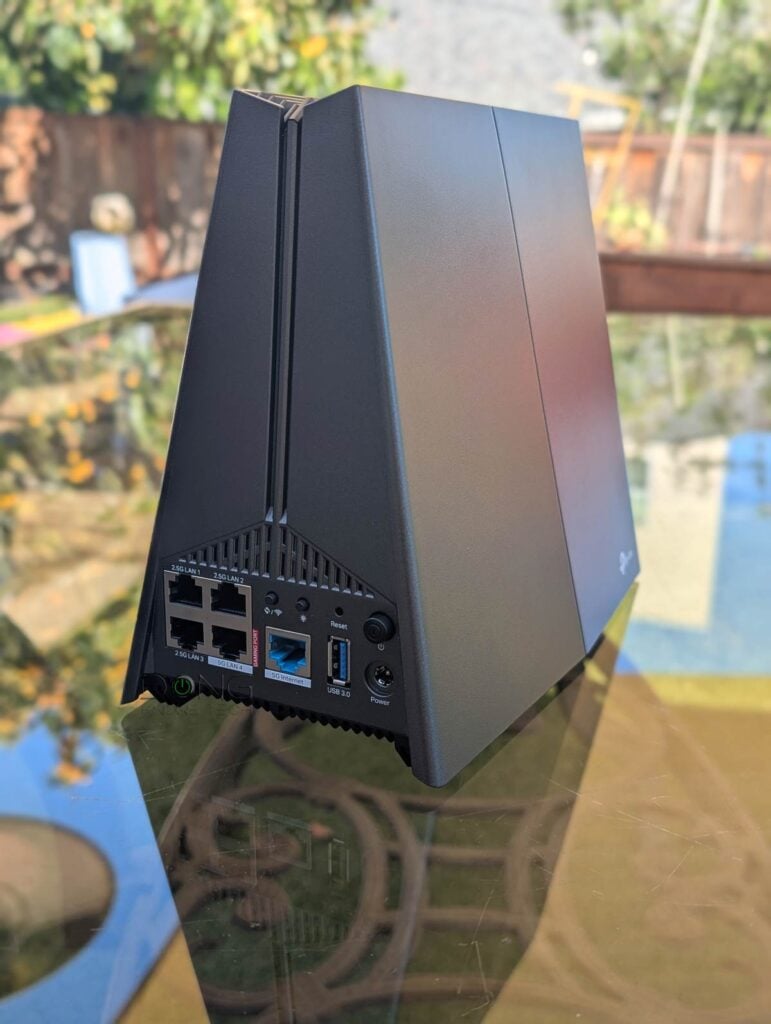
The Archer GE650 is TP-Link’s second “true” gaming router. It’s a compact Wi-Fi 7 machine with two 5Gbps ports. Additionally, it also comes with three 2.5Gbps ports. Out of the box, it has enough multi-gigabit ports for a small network.
Alternative from TP-Link:
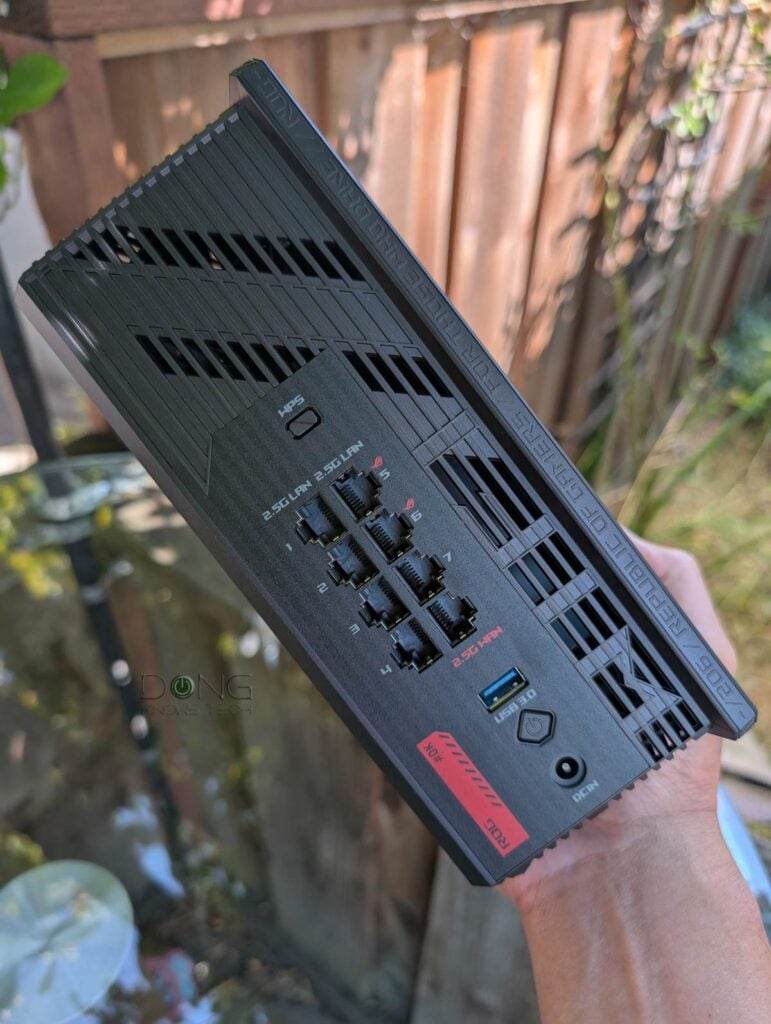
4. ASUS GS-BE18000 (Wi-Fi 7): 8x 2.5GBASE-T
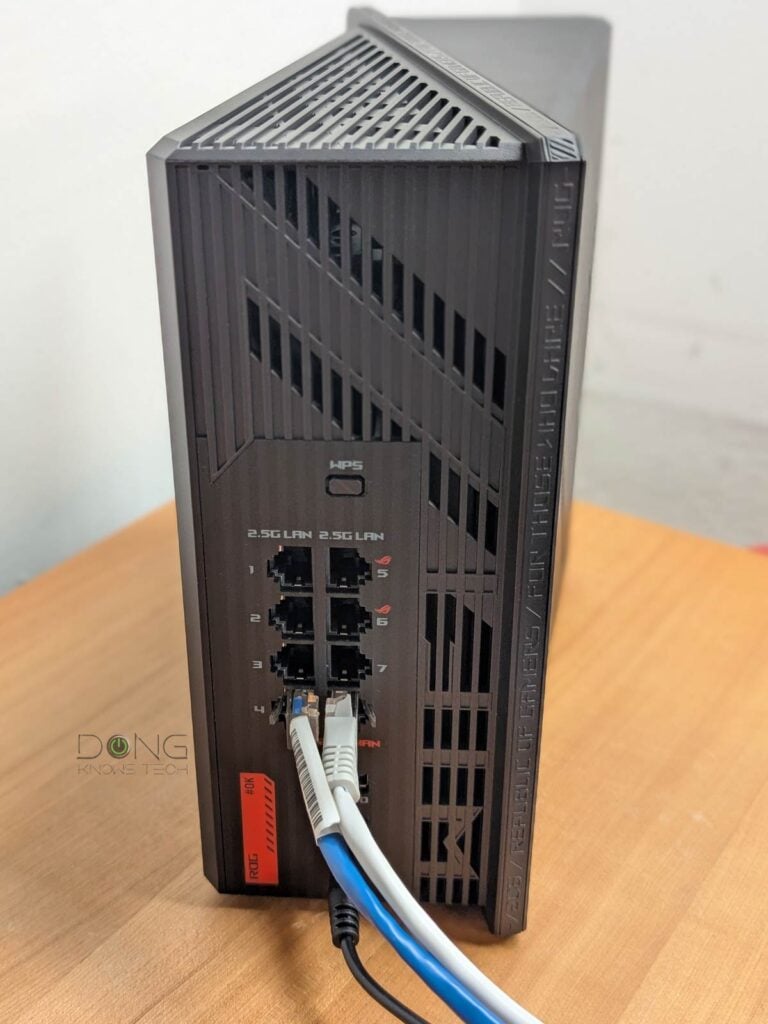
Like the TP-Link GE650, the GS-BE18000 is also a gaming router, but it’s one of ASUS’s many options in this category. What makes this model special, however, is that it’s the first home-grade Wi-Fi 7 router to feature Automated Frequency Coordination (AFC), which allows its 6GHz band to achieve exceptionally long range.
In terms of wired connectivity, the GS-BE18000 features eight 2.5Gbps ports, sufficient for a large local network.
Pros
Excellent overall performance, eight 2.5Gbps ports, AiMesh-ready, official AFC support with extended 6GHz range
Lots of free, in-depth, and useful networking features and settings (VPN, AiProtection, Parental Control, Bandwidth monitoring, etc.)
No vendor required login account; fanless; runs cool and quiet
Cons
AFC needs help from a supported client in getting precise GPS coordinates
NAS performance (when hosting a portable SSD) could be better
3. ASUS RT-BE92U (Wi-Fi 7): 4x 2.5GBASE-T and 1x Gigabit

The ASUS RT-BE92U is a bit more than a 2.5Gbps router. It has one 10Gbps port. Unfortunately, without a 2nd 10Gbps port, it remains a 2.5Gbps networking device. Among other things, it’s the most flexible ASUS router for placement, with a clever wall-mounting design.
Alternatives from ASUS:
Pros
One 10Gbps and four 2.5Gbps ports accompanied by decent Wi-Fi 7 specs
Lots of valuable features thanks to ASUSWRT 5.0, including AiMesh, online protection, Parental Controls, multiple virtual SSIDs (SDNs)
Flexible network ports with Dual-WAN support
Universal setting backup and restoration; open source firmware
Relatively compact, fanless, wall-mount-ready design; comparatively affordable
Cons
No 2nd 10Gbps port; no Link Aggregation
Mid-tier 5GHz and 6GHz bands; no built-in gaming features
2. Ubiquiti UniFi Dream Router 7 (Wi-Fi 7): 1x SFP+ and 4x 2.5GBASE-T


The UniFi Dream Router 7 is indeed a dream router for those with 2.5Gbps bandwidth needs. In fact, if it had one more 10Gbps port, it’d belong to the top-tier multi-Gigabit crowd.
Like the UCG-Max above, the UDR7 is much more than an advanced router. It can do much more than networking, and the fast ports are only part of what it offers.
Pros
All Multi-Gig ports, support all of Ubiquiti’s business hardware segments, built-in PoE
Excellent throughput performance with excellent coverage (for the specs)
Tons of useful networking features, including a mesh controller, all via a comprehensive web user interface and an optional mobile app—neither requires a login account.
Compact and beautiful design, comparatively affordable, quiet operator
Cons
No 2nd 10Gbps ports, single low-power PoE port
Not wall-mount-ready, internal fan, awkwardly placed microSD slot
2.4GHz band’s performance could be better
1. Ubiquiti Cloud Gateway Max (non-Wi-Fi): 5x 2.5GBASE-T
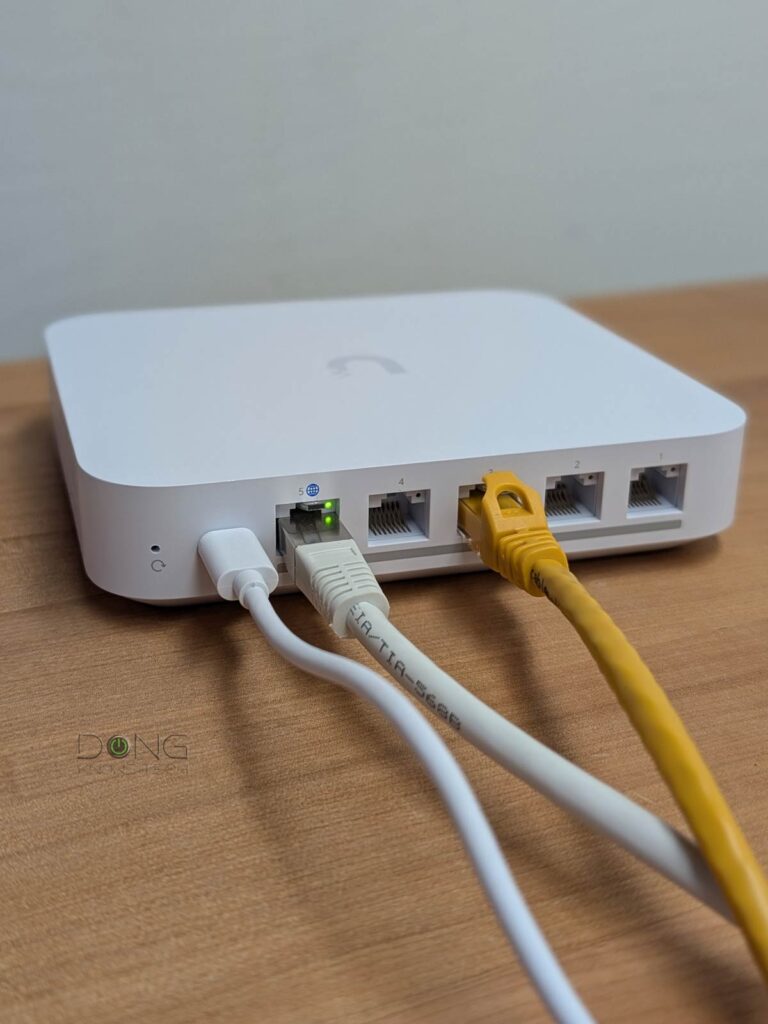
The Cloud Gateway Max is a UniFi console from Ubiquiti that can do much more than just a standard (non-Wi-Fi) router—you can quickly add Wi-Fi to it via a UniFi access point. For example, it can be the UniFi Protect NVR for an IP camera surveillance system, the controller for an IP phone system, and more. And it can do all that simultaneously. That, plus the five 2.5Gbps ports, the compact design, and excellent performance, makes its $199 price tag (no storage) a steal.
The Cloud Gateway Max works with any access point, but it’s designed to host those from the same UniFi family.
Pros
Excellent entry-level Multi-Gig (2.5Gbps) performance for a comparatively low cost
Compact and aesthetically pleasant design with powerful hardware to handle a home or small business network via multiple simultaneous enterprise-class applications
A complete set of useful networking features, including powerful security/web-filtering and WireGuard VPN; excellent web user interface; useful mobile apps
No subscription is required
Cons
No 10Gbps ports or built-in PoE
Extra features require a UI login account
Runs a bit warm, no SSD caddy is included in the non-storage version
The final thoughts
Generally, if you have a Gigabit-class broadband connection—one that offers 800Mbps or faster download speed—it’s time to think of investing in a Multi-Gig router. That’s the only way to make sure your Internet isn’t slowed down at the entry point. However, it never hurts to have a router with network ports of a higher grade than your needs require. Many of those mentioned above come with a friendly price tag thanks to the entry-level 2.5Gbps grade, making them an excellent investment.