
This post features the top 5 Wi-Fi7 mesh systems you can confidently bring home today. All Wi-Fi 7 solutions will work well with existing clients, as long as they are not too old. That said, if you have an aging mesh Wi-Fi system that’s been struggling, I recommend giving one of these Wi-Fi 7 sets a go today.
These are full-band hardware, meaning they support all three bands, including 2.4 GHz, 5 GHz, and 6 GHz. For those with only the 2.4GHz and 5GHz bands, check out the best five dual-band Wi-Fi 7 mesh systems instead. On the other hand, if you live in a home that needs only a single Wi-Fi access point, this list of the top five Wi-Fi 7 routers is more suitable.
Dong’s note: I first published this frequently-revised post on February 24, 2024, and last updated it on June 3, 2026, with the latest picks.
Top five best Wi-Fi 7 mesh systems: The battle-tested list
This best-five list is sorted by rating, with the most recommended at the top—the numbers indicate their rankings. When applicable, I’ll also mention the alternatives, which are those that almost made it to this list or were previously on it.
I’ve used all the devices mentioned here for an extended period, and I continue to use some of them for the foreseeable future. They are real battle-tested options.
1. Ubiquiti UniFi

Ubiquiti’s UniFi is not a particular set of purpose-built Wi-Fi 7 systems. Instead, you can combine the hardware to create a mesh network or a robust wired network. If you have a wired home, this is undoubtedly the best way to establish a robust home or office network. On the other hand, if you need to extend Wi-Fi coverage over a vast outdoor area, the U7 Mesh will help you achieve that like a walk in the park. For these reasons, UniFi is also one of the best DIY Wi-Fi systems.
Pros
Excellent and reliable performance with seamless support for UniFi hardware of multiple categories (Network, Protect, Talk, Access, etc.)
Tons of helpful networking features, a comprehensive web user interface, and a mobile app
Practical and aesthetically pleasing hardware design, no vendor account required
Cons
No AP mode as a system, most Wi-Fi-integrated consoles can only work in the primary router role
Some helpful features (teleport VPN, automatic backup, convenient remote access, etc.) require a vendor-connected login account
Default Wi-Fi settings heavily favor compatibility and reliability over fast real-world performance
2. ASUS ZenWiFi BT10

The ZenWiFi BT10 is ASUS’s top-tier tri-band Wi-Fi 7 mesh system and has proven to be an excellent option thanks to its 10Gbps wired or MLO wireless backhaul. In certain situations, it’s even better than the more expensive ZenWiFi BQ16 Pro quad-band model.
Asus’s similar alternatives:
Pros
Tri-band Wi-Fi 7 with two 10Gbps ports and excellent performance
ASUSWRT 5.0 has lots of customizations and free-for-life high-end features (VPN, Parental Controls, Online Protection, Dual-WAN, Link Aggregation, Smart Home Master, etc.).
Robust web user interface and helpful optional mobile app; easy-to-blend-in design
Comparatively compact with no internal fan; runs cool and quiet
Cons
No AFC (at launch); not wall-mount-ready
3. MSI Roamii BE Pro
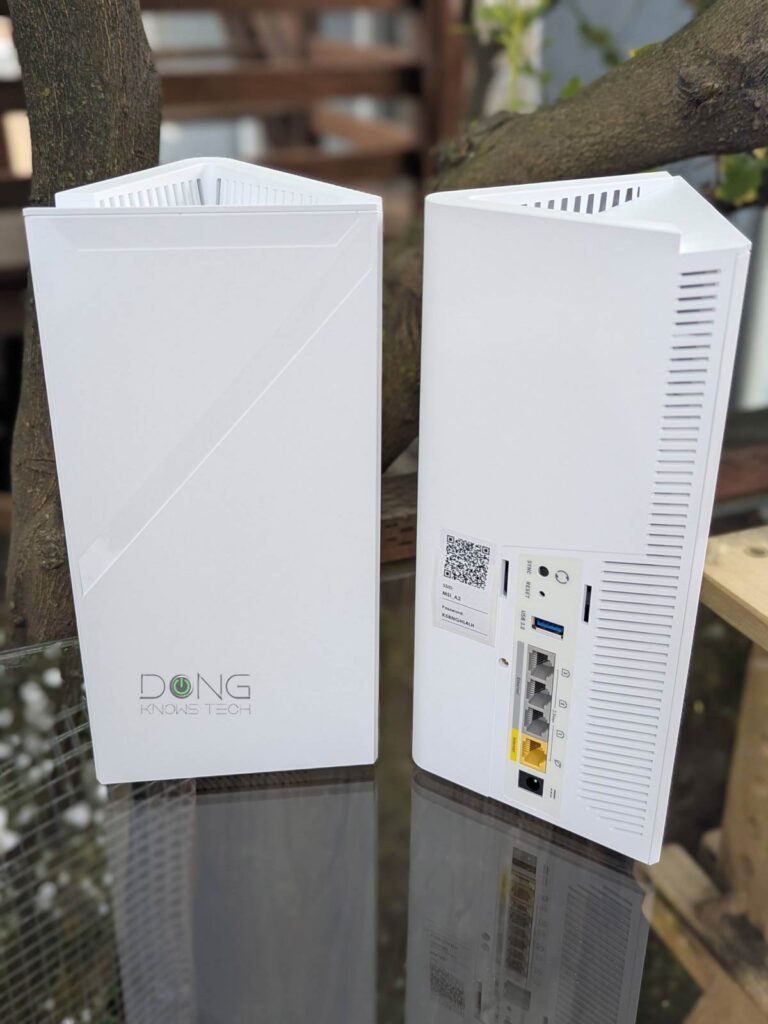
The Roamii BE Pro is MSI’s 2026 tri-band mesh system and is the most modest on this list in terms of hardware specs. However, it’s also the most affordable by far. With four 2.5Gbps ports, plenty of free features, and excellent performance, it makes a sensible choice for those needing no more than 2.5Gbps of bandwidth.
Pros
Affordable with excellent entry-level Multi-Gigabit performance via mid-tier Wi-Fi specs and four 2.5Gbps ports
Non-intrusive hardware with standard feature set, free online protection, robust local web-based UI, and ample USB-based features
Aesthetically pleasing, fanless design, runs cool, wall-mount accessories included
Helpful MSI Router 2.0 mobile app, no privacy risk, no add-on premium
Cons
No 10Gbps ports or AFC, NAS performance when hosting USB drive could be better
Hardware units are not pre-synced, no single router or 3-pack options (for now)
4. TP-Link Deco 7 Pro BE14000 (a.k.a. Deco BE67 or Deco BE68)
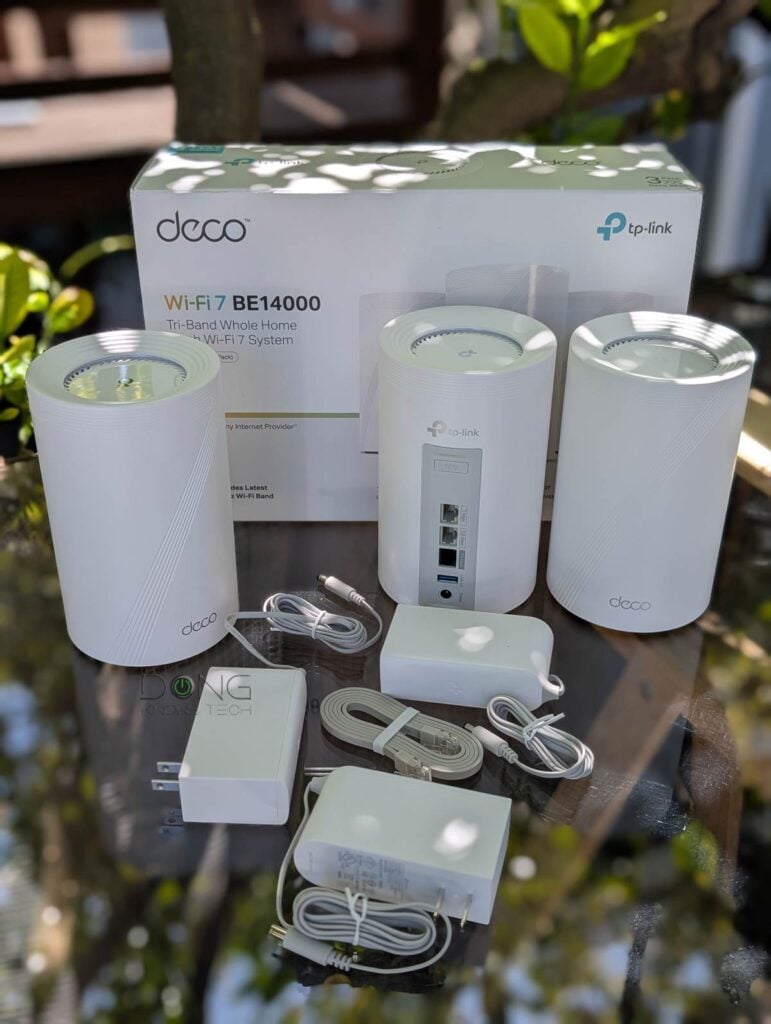
The Deco 7 Pro BE14000 is a TP-Link 2026 tri-band Wi-Fi 7 mesh system. It’s not top-tier in hardware specs, but it has enough to deliver reliable, fast performance, and its affordable price of around $600 for a 3-pack (often discounted further) never hurts. If you’re a fan of TP-Link’s app-operated mesh, it’s a great deal.
TP-Link’s alternatives:
Pros
Tri-band Wi-Fi 7 with fast and reliable performance at affordable pricing
Simple to set up and easy to use, with a generous set of Wi-Fi settings and network features
Fanless, relatively compact design
Cons
Single 10GbE port, mid-tier 5GHz specs, range could be better
Available in confusing variants
Vendor-connected mobile app required, advanced features cost extra
5. NETGEAR Orbi 870 series

The Orbi 870 series is NETGEAR’s third Wi-Fi 7 Orbi set, and it’s quite a charm. It’s the second Orbi set to do away with the permanent dedicated-backhaul-band approach, as with the Orbi 770 series, while offering top-tier Wi-Fi 7 specs on the 5GHz and 6GHz bands.
It’s still far from perfect, though, because it has only one 10 10Gbps port on the router unit.
Netgear’s alternatives:
Pros
Straightforward tri-band without a permanently dedicated backhaul with good performance
10Gbps WAN and all 2.5Gbps LAN ports to guarantee entry-level multi-Gigabit experience in wired or wireless backhauling
Aesthetically pleasant design; no internal fan
Cons
No 10Gbps LAN or USB ports; no AFC; no user-accessible customization for the 6GHz band; limited SSID options
No or web-based remote management, thin on free networking features; new default IP address for the web user interface
Online protection requires subscriptions; stagnant and poor Orbi app
The final thoughts
There you go! If you’re looking to upgrade your system to Wi-Fi 7, any of the options above, and their alternatives, will get the job done. Pick one based on your budget, home layout, and bandwidth needs.
Generally, with some luck and, especially, good wiring, a Wi-Fi 7 mesh system will give you the maximum coverage you need and the real-world multi-Gigabit experience you’ve always wanted.
If you need more help, this quick shopping guide will come in handy.