
This post lists the five best Wi-Fi 7 routers—specifically, the best tri-band Wi-Fi 7 routers—and their alternatives.
These are all excellent options to consider when you need a new router in a home where a single Wi-Fi access point is enough. Need extended Wi-Fi coverage? Some of the models mentioned here are mesh-ready and can be a good way to get started with a Wi-Fi system. Or this list of purpose-built Wi-Fi 7 systems offers better options.
Dong’s note: I first published this frequently-revised post on December 12, 2023, and last updated it on June 9, 2026.
Five best Wi-Fi 7 routers: The battle-tested contenders and their close alternatives
Generally, any Wi-Fi 7 access point (and consequently any Wi-Fi 7 router) will work with most existing clients right out of the box—as long as they are not too old—or can be tweaked to work with all legacy clients that use Wi-Fi 6E and older standards.
However, you need Wi-Fi 7 devices to take advantage of the new standard, and by now, that’s generally the case if you buy a new computer or mobile device. Dated computers can be upgraded to Wi-Fi 7 via add-on adapters.
Already set on the client side? Here are the top Wi-Fi 7 routers you can bring home today. This list is sorted in the recommended order, with the best at the top—the numbers are the rankings. When applicable, I’ll also add similar alternatives that were previously on the list.
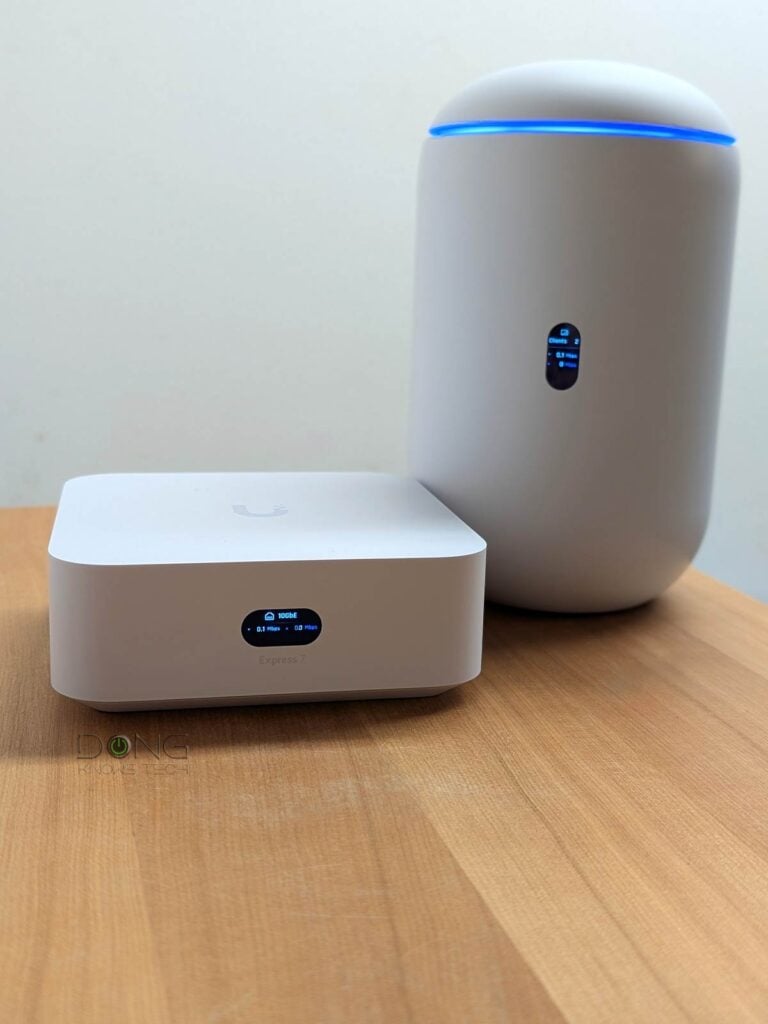
1. Ubiquiti UniFi Dream Router 7

While not the top-tier hardware, the UDR7 is indeed a dream router for anyone with entry-level multi-Gigabit (2.5Gbps) bandwidth needs. It makes up for mid-tier hardware by offering the best feature set, designed to make all users happy, from home users to enterprise-class users.
Like other UniFi gateways, the UDR7 can do much more than just be a robust Wi-Fi 7 router. Among other things, it can serve as the controller for a Wi-Fi system when paired with UniFi access points, while also functioning as the network video recorder for a camera surveillance system via its built-in Protect application.
Alternatives: A combo of the 10 10Gbps-capable UCG-Fiber and a UniFi access point.
Pros
All Multi-Gig ports, support all of Ubiquiti’s business hardware segments, built-in PoE
Excellent throughput performance with excellent coverage (for the specs)
Tons of useful networking features, including a mesh controller, all via a comprehensive web user interface and an optional mobile app—neither requires a login account.
Compact and beautiful design, comparatively affordable, quiet operator
Cons
No 2nd 10Gbps ports, single low-power PoE port
Not wall-mount-ready, internal fan, awkwardly placed microSD slot
2.4GHz band’s performance could be better
2. ASUS GT-BE19000AI

The GT-BE19000AI is arguably ASUS’s best Wi-Fi 7 router in all aspects. Despite a similar design to previous ASUS ROG gaming routers, such as the GT-BE98 Pro or the GT-AX11000 Pro, it’s a totally different beast thanks to support for Edge AI and Docker hosting. Other than that, it has multiple Multi-Gig ports, tons of gaming features, and uncompromising Wi-Fi 7 support.
Like all ASUS routers, you can use multiple GT-BE19000AI units to build a formidable AiMesh Wi-Fi system.
Alternative:
Pros
Top-tier Wi-Fi 7 with excellent real-world performance
Refined ASUSWRT 6.0 firmware with lots of free, in-depth, and valuable features and settings (advanced VPN, AiProtection online protection, Parental Control, adblocking, virtual SSDs, AI-enabled gaming-related features, and AiMesh)
Two 10Gbps and four 2.5Gbps Multi-Gig ports with WAN/LAN flexibility; supports Dual-WAN and LAN Link Aggregations
No vendor required login account, silent performer, runs relatively cool
Cons
Bulky design, buggy and impractical Docker/AI support
Pricey, not wall-mount-ready
3. Ubiquiti UniFi Express 7 (UX7)
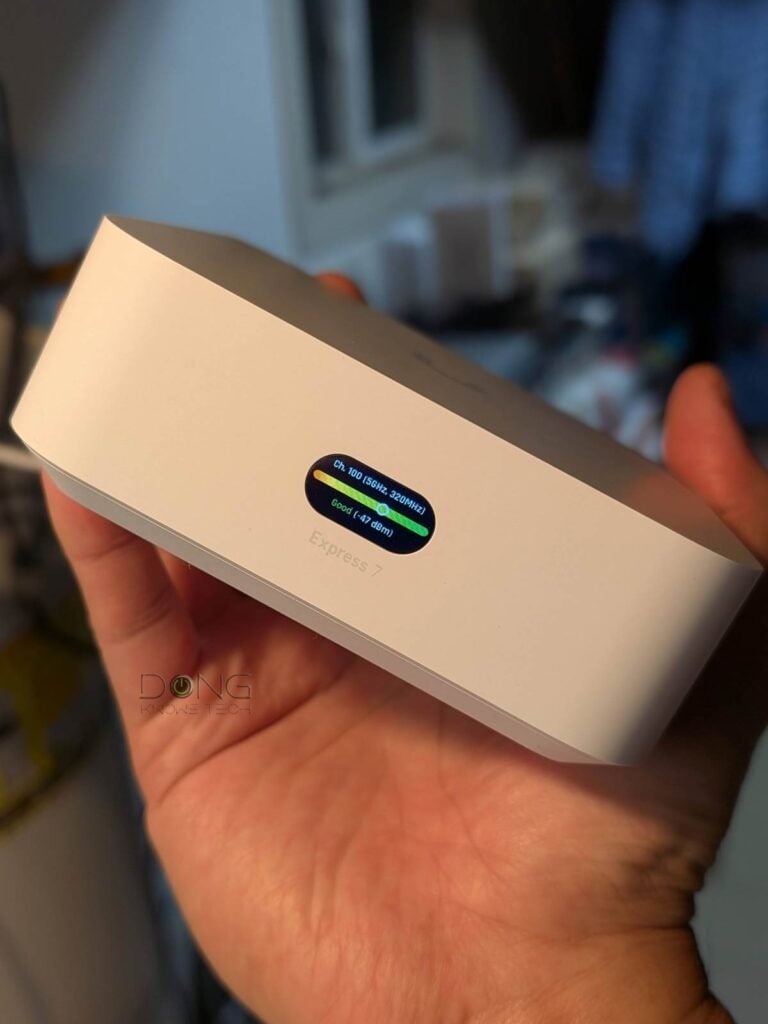
The UX7 is the only Wi-Fi 7 UniFi Cloud Gateway that can serve as both a router and an access point. It’s also super compact. As a result, it’s an excellent standalone router for those needing just one access point, and it can also serve as an add-on unit for a network hosted by another UniFi Cloud Gateway, including another unit of the same model.
Pros
Flexible enough to be the primary router or a satellite unit of a robust UniFi mesh system
Excellent throughput performance for the specs, reliable coverage
Tons of useful network-related features, including a mesh controller
Compact, fanless, and beautiful design, comprehensive web user interface with an optional mobile app
Affordable, quiet, and remains relatively cool during operation
Cons
Only two network ports, with only one being 10 Gbps, no PoE, support only the UniFi Network application
Convenient network-related features require a UI login account, not wall-mount-ready
Rigid backhaul as a mesh satellite unit; no AP mode when hosting a Wi-Fi system; the MLO feature could be better overall
4. TP-Link Archer GE650
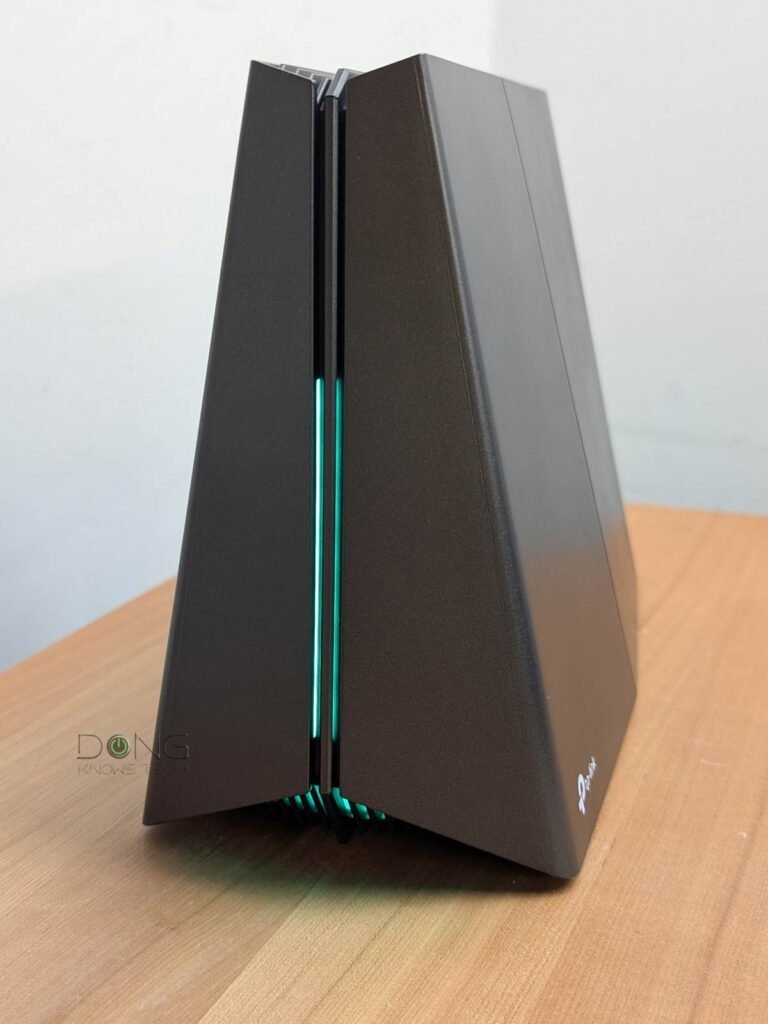
The Archer GE650 is not TP-Link’s top-tier gaming router—it’s a notch below the Archer GE800 in terms of specs. However, it has the best combo of compact design, a rich feature set, excellent performance, and a friendly price tag.
As with most TP-Link Archer routers, the GE650 supports EasyMesh, allowing you to connect multiple units to form a Wi-Fi system.
Alternatives from TP-Link:
Pros
Excellent performance for the specs.
Two 5GBASE-T, three 2.5GBASE-T ports in a compact, fanless, cool-looking design
Robust web user interface with a generous set of free network features, including MLO and gaming-related functions
Competitively priced, EasyMesh-ready
Cons
No 10Gbps ports, mid-tier Wi-Fi 7 specs, no AFC
Online protection and advanced parental controls require subscriptions
5. NETGEAR Nighthawk RS700S
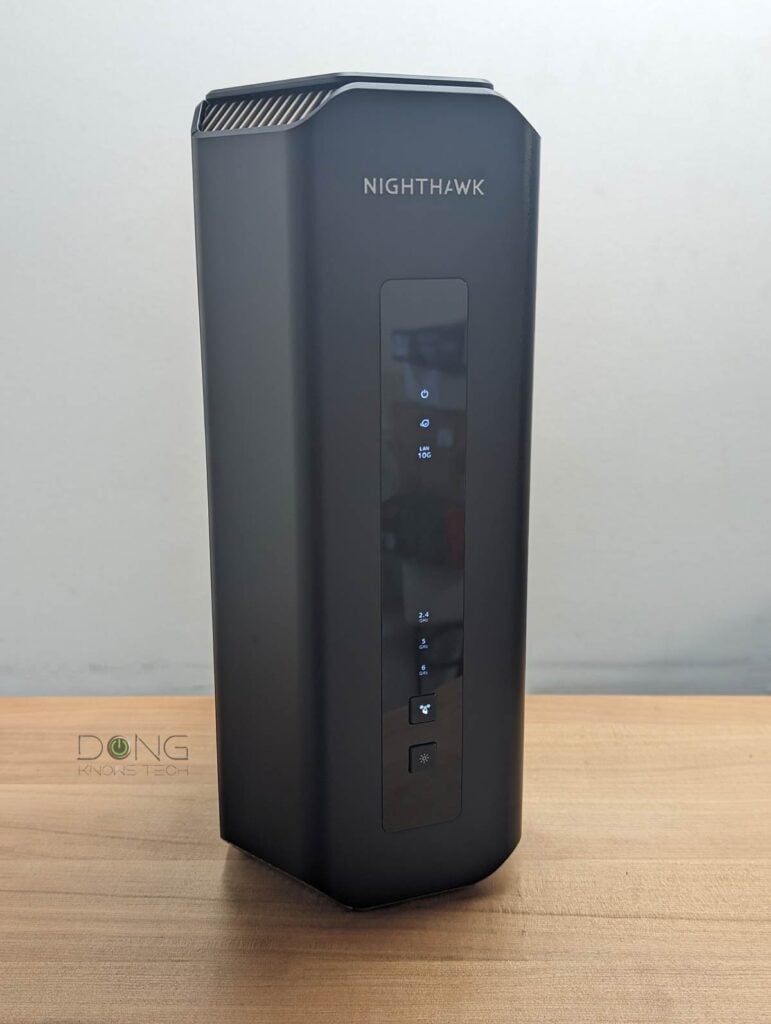
The Night Hawk RS700S is NETGEAR’s most powerful Wi-Fi 7 standalone router, offering excellent performance. Unfortunately, its firmware shares the same app-oriented approach and might not be suitable for advanced or business users due to the omission of certain features. It’s also the only one on this list that’s not mesh-ready. Still, this is a great option for any home user needing a single Wi-Fi 7 access point.
Alternative:
Pros
Top-tier tri-band specs with Wi-Fi 7 support
Two 10Gbps Multi-Gig ports
Robust web interface, helpful (optional) mobile app
Practical fanless design; runs cool and quiet
Cons
Only two Multi-Gig ports; no standard Remote Management via Dynamic DNS
Online protection and Parental Controls require the Nighthawk mobile app and premium subscriptions
Extra: ARRIS SURFboard G54—the first Wi-Fi 7 retail Cable Gateway

Only Cable Internet subscribers needing only a single Wi-Fi access point (router) should apply.
The ARRIS SURFboard G54 is the first residential Cable Gateway with Wi-Fi 7 and, since its release, has been a perfect candidate for those looking to replace an ISP-supplied gateway. This gateway will pay for itself if you’re still renting the equipment from your Internet provider.
Pros
Wi-Fi 7 with one 10GBASE-T LAN port and a built-in DOCSIS 3.1 modem
Full web-based local user interface
Reliable Wi-Fi performance with good coverage; small footprint; runs cool and silent
Cons
Frustratingly ill-thought-out security requirements (at launch); no standalone router or access point mode
No 160MHz channel width on the 5GHz bands; no advanced networking features (VPN, QoS, Link Aggregation, web-based remote management, etc.)
Only one Multi-Gig port; large physical design that can topple easily
The final thoughts
Wi-Fi 7 is great, but it’s not necessary to upgrade if you still have Wi-Fi 6 hardware.
However, with Wi-Fi 8 on the horizon, it only makes sense to consider Wi-Fi 7 if you need a new router today. That’s especially true if you have reduced the number of legacy clients (Wi-Fi 5 and older) to avoid potential backward-compatibility issues.
After all, getting the latest Wi-Fi standard can be a gratifying experience, and in this case, any of the options above will do you a solid.